The Ancient and Sacred Meanings of “Mama” and “Abba”
The Ancient and Sacred Meanings of “Mama” and “Abba”
Across ancient cultures and languages, the words for mother and father—such as “Mama”, “Abba”, and “Ummu”—carry profound spiritual and cultural significance. These terms embody the sacred roles of divine motherhood and fatherhood, tracing their roots through ancient Hebrew, Paleo-Hebrew, Aramaic, Arabic, and beyond. In this exploration, we uncover their meanings, pictorial representations, and connections to the cradle of civilization.
1. Ancient Hebrew and Paleo-Hebrew
“Abba” (Father)
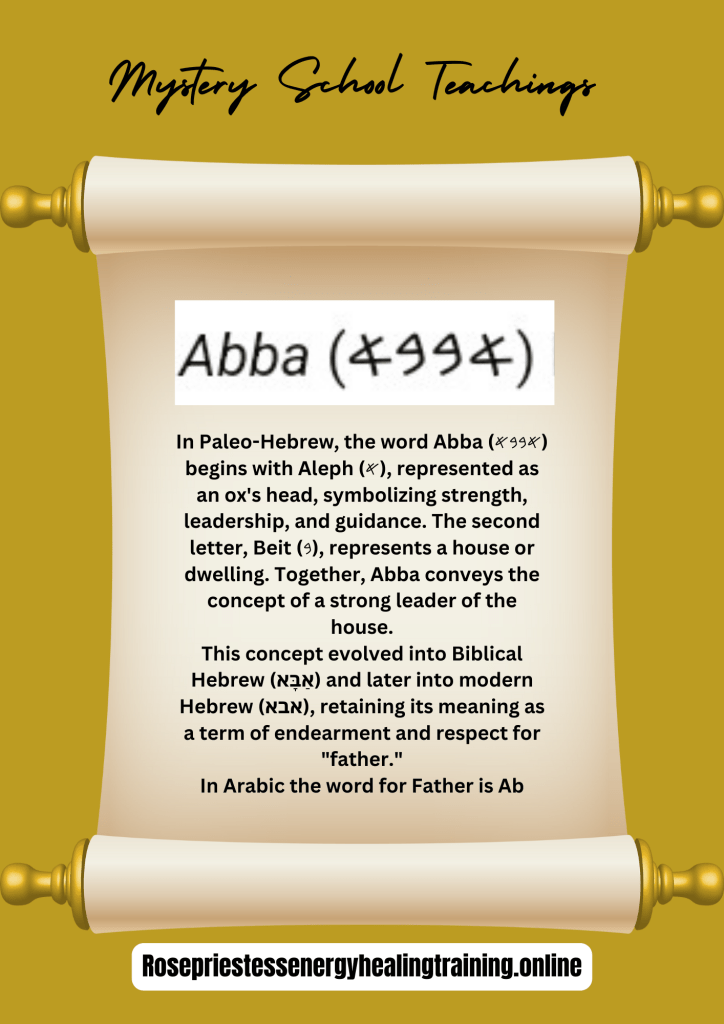
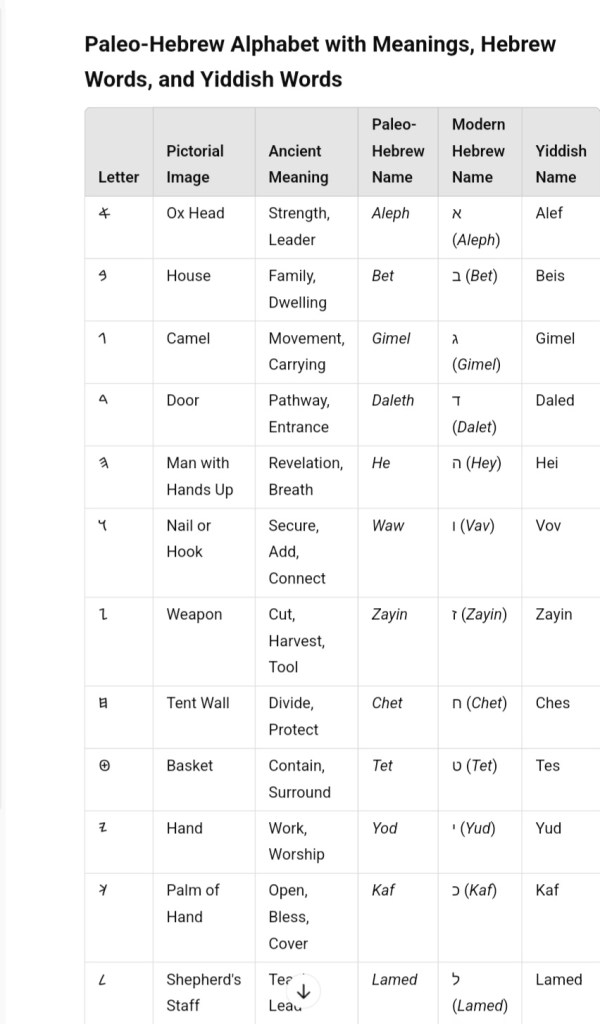
- In Paleo-Hebrew, the word Abba (𐤀𐤁𐤁𐤀) begins with Aleph (𐤀), represented as an ox’s head, symbolizing strength, leadership, and guidance. The second letter, Beit (𐤁), represents a house or dwelling. Together, Abba conveys the concept of a strong leader of the house.
- This concept evolved into Biblical Hebrew (אַבָּא) and later into modern Hebrew (אבא), retaining its meaning as a term of endearment and respect for “father.”
“Mama” (Mother)
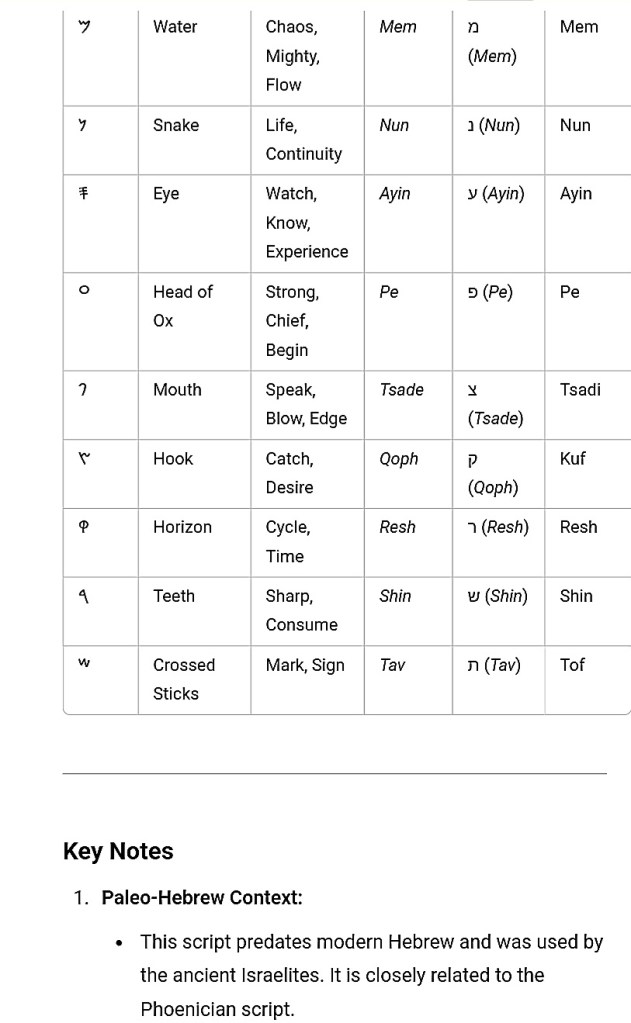
- In Paleo-Hebrew, the word Mama (𐤌𐤌) is formed by the letter Mem (𐤌), which resembles waves of water. It signifies primordial waters, life, and nourishment. The repetition of Mem emphasizes the nurturing, life-giving essence of the mother, or “the head of the waters.”
- In Biblical Hebrew, the word for mother is Em (אֵם), composed of Aleph (א), the ox’s head, and Mem (ם), the waters, signifying a strong life-giving force.
- In modern Hebrew, Ima (אמא) is the affectionate term for “mother.”
2. Aramaic
- In Aramaic, a sister language to Hebrew, “Abba” (ܐܒܐ) retains its meaning as “father” and is frequently used in sacred texts, including the New Testament, where it denotes both a biological and divine father.
- The word for mother in Aramaic is “Imma” (ܐܡܐ), derived from the same Semitic roots, emphasizing nourishment and life.
3. Arabic
- In Arabic, the word for mother is Umm (أمّ), and the more formal or possessive form is Ummu (أُمُّ).
- Ummu is a deeply significant word, often used in titles such as Umm al-Qura (Mother of Cities), referring to Mecca. It denotes the origin, source, or nurturing foundation.
- Written in Arabic script, it is represented as: أمّ.
- The word for father in Arabic is Ab (أب), which closely parallels its Hebrew and Aramaic counterparts, emphasizing the shared Semitic linguistic heritage.
4. Yiddish and Modern Hebrew
- In Yiddish, a language derived from German and Hebrew, the words for father (Tate) and mother (Mame) differ but reflect the linguistic evolution of Jewish communities in Europe.
- In Modern Hebrew, the terms Abba (אבא) and Ima (אמא) are affectionate yet deeply rooted in the ancient symbols of strength, guidance, and nurturing waters.
Symbolism Across Cultures
These sacred terms reflect a shared human understanding of family and divine roles:
- “Abba” as the leader, protector, and strength of the household.
- “Mama” or “Ummu” as the life-giver, nurturer, and the head of primordial waters, symbolizing creation and sustenance.
The connection between these ancient words and their meanings across Semitic languages points to a shared spiritual and cultural heritage, rooted in the Near East and spreading across regions and faiths.
A Connection to the Cradle of Civilization
The linguistic and symbolic similarities of Abba and Mama/Ummu reveal their origins in the ancient Nile Valley, Mesopotamia, and Semitic traditions. The sacred roles they describe echo in the DNA of communities from Ethiopia to Palestine, highlighting the rich tapestry of human history and spiritual thought. These words, imbued with divine energy, continue to resonate with their timeless significance in our modern spiritual journeys.
This study forms part of my next course which will be about Isis and Mary Magdalene and an extract of one of the written lectures is below:
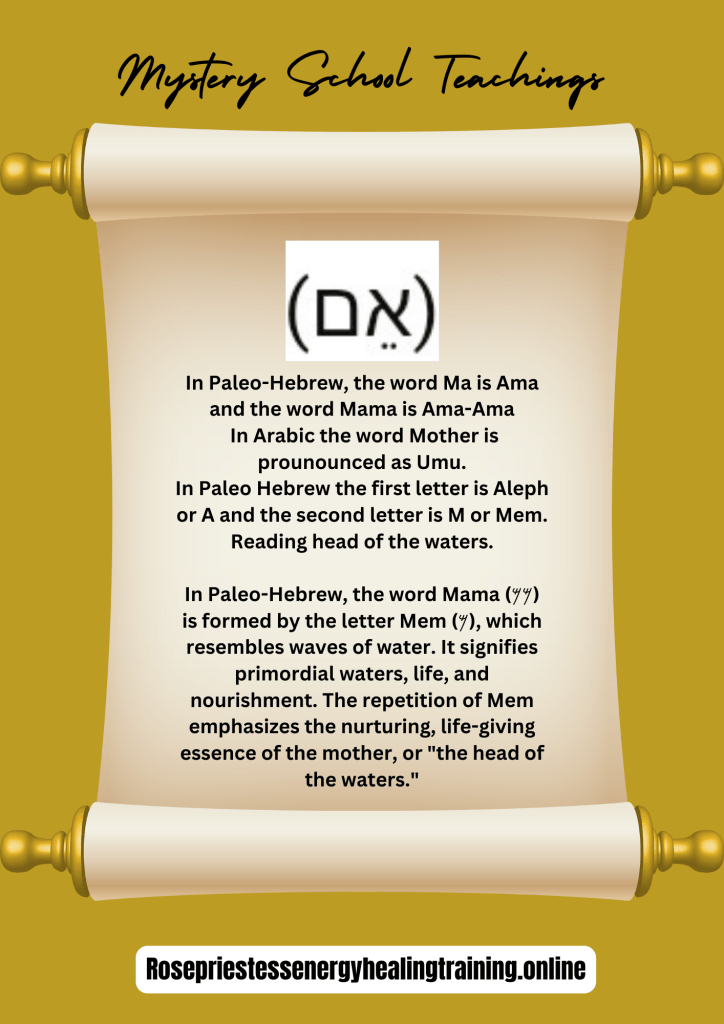
The letters Mem and Aleph might read as “First Waters” reading it Right to Left as Hebrew is written. Backwards the word reads Ama. The word Ma is still a word used to describe a mother today. From the word Ma we get Mama and Mother. The sea and waters have always been connected to the Divine Feminine, the sea, the waters, the moon and the cosmos. In Ancient Egyptian spirituality Hathor was the Mother Cow Goddess representing nurturing, the cosmos and the earth, whispers of this ancient mother goddess tradition linger on with the cosmos described as “The Milky Way”
Across ancient traditions, ma signifies nurturing, creation, and the life-giving essence, tying to the womb of the cosmos—the Great Mother. The Mysteries of the Water Goddess and the Water Priestesses, The Lemurians and Star Nations and Moon Mysteries. The Sea Mother and the Water Goddess.
Esoterically, ma expands into the Gnostic interpretations of mer (waters) and the mystical mer-men and mer-women, archetypes representing humanity’s spiritual connection to the sea of consciousness. These figures, often portrayed as beings of both land and water, symbolize the duality of existence: spirit and matter, the seen and unseen. The Mother of the Sea Goddess archetype is present across cultures, from Yemaya of the Yoruba tradition to Tiamat of Mesopotamian mythology, and from Hathor in Egyptian lore to Aphrodite rising from the waves. All embody the nurturing and transformative power of the waters. This primordial Goddess energy is the Life Force of the Divine it is the mastery of emotions, the purification and regenerative force of the Divine Feminine. This energy stream is connected to the Rose, the Mar-ies, the Mary’s, Stella Maris and the intelligence of the waters. The waters are the dominion of the Divine Feminine as a primordial Mother Goddess. This is the domain of the Divine Feminine rooted in ease, flow, flexibility, healing, purification and release. The waters carry the memory and vibration of the Light beings that once walked the earth. Mastering the waters is about mastering our emotions and rising above them. The Mers, Myrrh Bearers, the Mary’s, Mary Salome, Mother Mary, Mary Of Bethany and Mary Magdalene represent being baptised into the Holy Spirit, known as Ruach Haqadesh in Hebrew. This embodiment of the Ruach Haqadesh requires the separating of the ego self and the principalities of the flesh from the quintessence Holy Spirit that was given to us on our first breath by the creator YHWH.
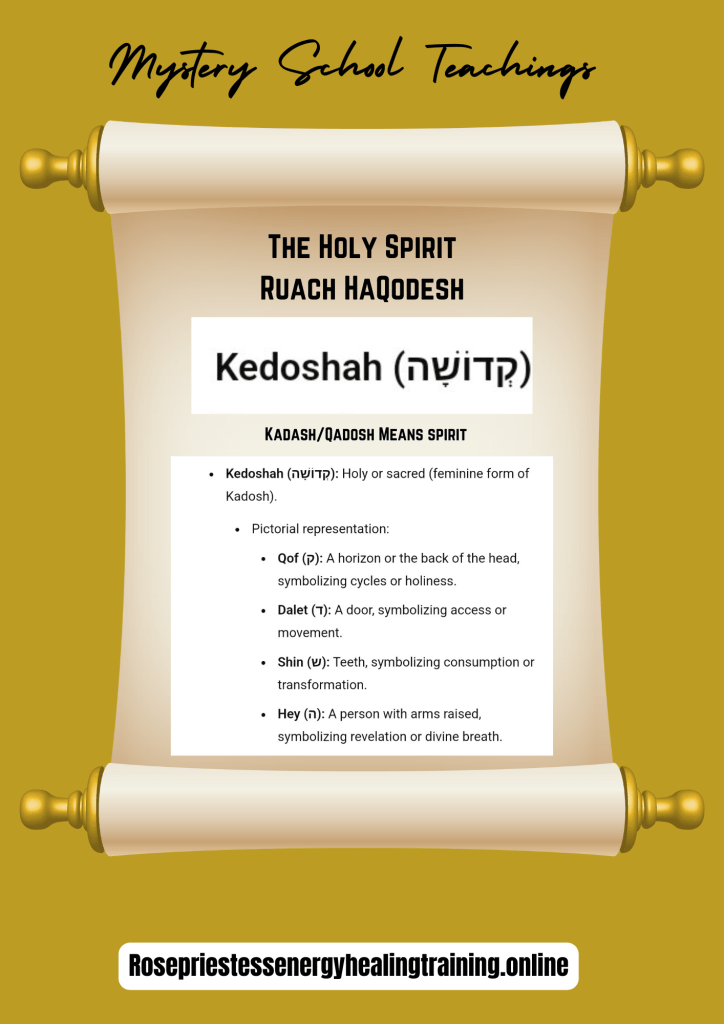
The Ruach Haqadesh also spelt in various ways Ruach HaQodesh, Qodosh, Qadasha means “Ruach” = Holy “Qadash” = Spirit. The Holy Spirit is the Divine Feminine Principle also represented in the various emanations of the Goddess. The Divine Feminine force and Holy Spirit is the Holy Spirit that comes down to earth to touch an individual. We connect to the Holy Spirit through our own Spirit. The Holy Spirit is one of the forces through which the Creator makes itself known. In the Kabbala the Holy Spirit is the Shekinah, the Holy Sophia, (Sophia means wisdom and forms the root of the word Philosophie)The Feminine force of God that is of YHWH. YOD Hey Vav Hey is the Tettegram used to describe GOD in the ancient literature of the old testament in Paelo Hebrew. GOD said I Am That I Am which is Ahayah Asha Ahayah (Hebrew: Ehyeh Asher Ehyeh.) Ahayah being “The Great I Am” both Ahayah and Yahuah YHWH contain the name YAH also YAHU which is who sent forth The Ruach Haqadesh. The ancient Hebrew language started out as pictures which were used to represent things. When it was spoken it was Ah, Ba, Ga, Da, Ha, Wa, Za Chaa, Ta, Ya, Ka, along the way due to the original picture form the Ah which was the Ox, if you turn the letter A on its side you see the Ox, and also if you turn it upside down you see the Ox, the A was written on its side. The U was a OO sound two “U” 2 u, u, became double OO double Ew double U which became W (uu). The YHWH is Ya Ha OO Ha I pronounce this as “Yah-Who-A” variations include Yahovah, Yahweh, Yah.
Jesus said he came in his father’s name but the people did not accept him. His father was Yahuah and his name (Jesus) was Yahusha also spelt Yashua (The letter J is less than 500 years old) variations being Yashi, Yahuahshi, Yeshua which means Yah is salvation or Yah saves. Yahuda also known as Judah contains the name Yahuah with the letter D in the middle. The D represents a door in ancient hebrew and is the word Dalet. Jesus prayed to his father as a separate entity who they called Yah who he came from.
The phrase “Yah saves” in Hebrew would be written as:
יָהוֹשַׁע (Yahoshua)
This is the root of the name Joshua (ישׁוּע, Yeshua), which means “Yahweh saves” or “Yah saves.”
So, “Yah saves” would be represented as יָהוֹשַׁע (Yahoshua), literally meaning “Yah (God) is salvation” or “Yah saves.” This name is significant in both the Hebrew Bible and Christian tradition, where it is linked to the name of Jesus (Yeshua in Hebrew).
Jesus went with his disciples to a place called Gethsemane. and asked them to keep watch while he prayed. Throwing himself face downward on the ground, he prayed “My Father, if it is possible, take this cup of suffering from me!”
Jesus’ Prayer to God: In the New Testament, Jesus frequently prays to God the Father. For instance, in the Gospels, Jesus refers to God as His Father (e.g., “Father, into Your hands I commit My spirit” – Luke 23:46), and He often prays to God in a manner that clearly distinguishes between Himself and God (e.g., in the Garden of Gethsemane, He prays, “Not My will, but Yours be done” – Matthew 26:39). These prayers demonstrate that Jesus, during His earthly ministry, maintained a distinct relationship with God the Father.
Yashua gave all the glory to Yah. Yahusha/Yeshua/Yeshia was anointed by God first and foremost and then Miriam Magdalena anointed him as part of the death rites in accordance with the Myrrhophore tradition and or possibly as part of the Ancient Mystery School Ascension and Enlightment Initiation. The Holy Spirit is a part of Yah, it is the Divine Feminine face of the Creator, however it is a part of Yah. Yah is neither male or female but contains both aspects in order to recreate from itself. The Holy Spirit Divine Feminine Principle of creation is represented as the Goddess across cultures because as humans in the physical we relate to things that we can see and touch, thus man kind has always found the desire to create images of the Divine represented in male and female form.
The Mother Goddess is the initiator that instigates the shedding of the ego and lower self and shadow so that we can embody the Divine Light, the Christ Light and become the risen man or womb-man, this is self mastery in order to serve the Highest Good and the Divine will. The waters carry the memory of how to complete this ascension process. The Mother Goddess always has us begin our initiation in the darkness, in the womb, in the cave, in the depths of our soul, our shadows and the underworld. Remember the Mother Goddess represents the waters, the shedding and purification process needed for transformation and acceleration to take place. Many Prophets and Sages received their Sacred Text teachings as downloads whilst isolating in a cave or in the Wilderness. The Dark Void of the Mother takes you under the superficial surface of what we see in the 3D realm to the unconscious suppressed domain of the Ego beginning at the roots. The Mother Goddess leads us to an initiation chamber where we must shed our ego in order to be reborn anew, resurrected.
 Rose Priestess Energy Healing Training Online
Leave a comment