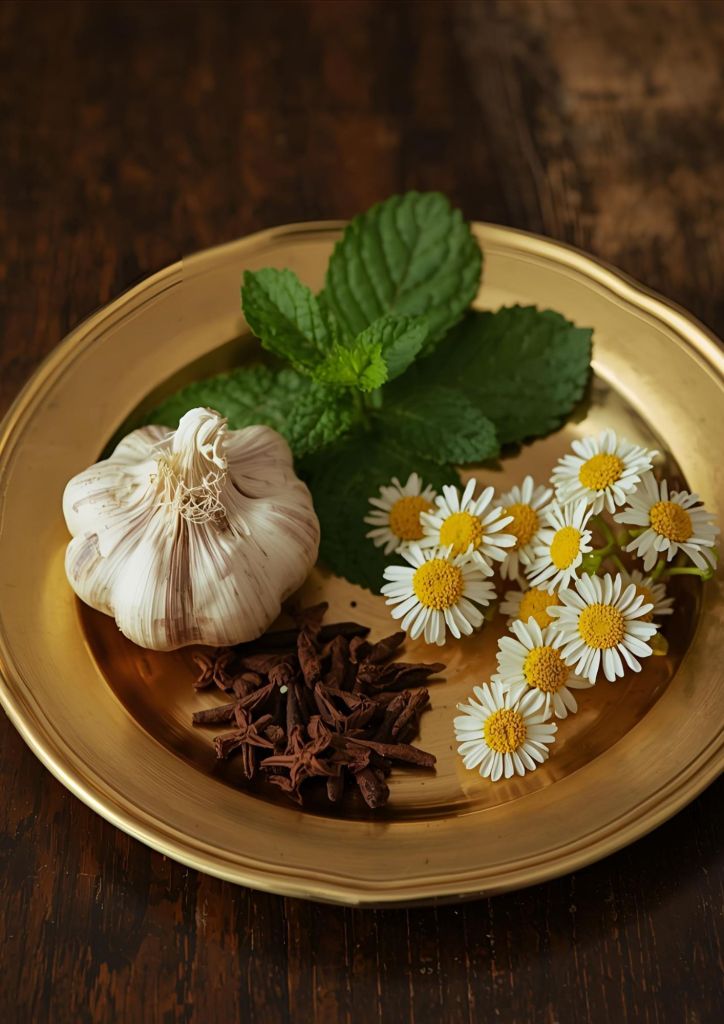
You might be suprised at the amount of natural pain relief you might be storing in your cupboard. Some herbs have been used for aeons for their analgesic and anti inflammatory properties. In simple terms some herbs have components in them that can numb pain and reduce swelling. Before modern pharmaceuticals, our ancestors reached for plants, roots, resins, and spices to soothe discomfort.
Whether you’re soothing a tension headache, calming inflammation, or easing toothache, there’s a plant that could help. Below are some of the most trusted herbal pain relievers, how they work, and how you can safely use them at home.
1. Garlic – Nature’s Anti-Inflammatory Ally
For: Joint pain, muscle soreness, inflammation, infections
Garlic (Allium sativum) is more than a culinary staple — it’s a potent anti-inflammatory and antimicrobial powerhouse. Rich in allicin, garlic supports circulation and helps reduce the chemical messengers that trigger pain and swelling.
How to use:
- For joint pain or inflammation, gently warm crushed garlic in olive oil then seperate the garlic from the oil and use the oil as a soothing massage oil (avoid open wounds).
- For internal inflammation, add fresh garlic to soups or teas to reduce systemic pain and support immune healing.
Energetic use: Garlic is known as a spiritual cleanser — it helps release stagnant or heavy energy that can manifest as physical pain.
When I’ve had a kidney infection through not drinking enough water (slap my hand) I have chewed on a whole garlic cloves to numb the pain until I could get to the doctors and it works but be warned it’s hot and you need a glass of water straight after to stop the fire that will be left in your mouth at the end.
2. Black Peppercorns – Warming and Stimulating Relief
For: Muscle aches, poor circulation, cold-related pain
The humble black pepper (Piper nigrum) contains piperine, a natural compound that boosts circulation and reduces inflammation. When applied topically in small amounts, it creates a gentle warming sensation that can ease sore muscles and tension.
How to use:
- Mix a few drops of black pepper essential oil (diluted in a carrier like sweet almond oil) and massage into tired muscles.
- Add freshly ground pepper to herbal teas or broths to stimulate digestion and circulation from within.
Energetic use: Peppercorn is a “fire herb” — it restores movement where energy feels stagnant or frozen, awakening vitality.
3. Myrrh – Ancient Resin for Mouth and Gum Pain
For: Toothache, gum inflammation, mouth ulcers
Myrrh (Commiphora myrrha) has been prized for millennia as a sacred resin and healing antiseptic. It’s a natural analgesic, antimicrobial, and anti-inflammatory, perfect for oral care and gum pain.
How to use:
- Mix a few drops of myrrh tincture in warm water and use as a mouth rinse for sore gums.
- For tooth pain, apply a cotton swab dipped in diluted myrrh tincture directly to the affected area.
Energetic use: Myrrh carries grounding and protective energy — it soothes emotional pain as it calms physical discomfort.
A few weeks ago my bottom gums were swollen so I took a small piece of Myrrh and placed it in my mouth below my bottom teeth on the gum area that was swollen and kept it there for a few hours. By the morning the swelling had gone.
4. Salt Water – The Ancient Cleanser for Eye and Skin Pain
For: Styes, sore eyes, minor wounds
Simple yet effective, salt water (saline) has natural antibacterial and drawing properties. It helps cleanse infections and soothe irritation — especially for styes (eyelid inflammation) or minor skin infections.
How to use:
- Dissolve ½ teaspoon of sea salt in a cup of warm, sterile water.
- Soak a clean cotton pad and gently compress the affected eye for 5–10 minutes. Repeat several times a day until swelling subsides.
Energetic use: Salt is purifying — it clears heavy energy and restores natural flow, both physically and spiritually.
Salt water is one of my go-toos it works a treat. I use salt water for styes and also as a gargle for any mouth pain issues or at the first sign of any kind of issues related to teeth and gums. I also use salt water to wash any cuts and scrapes when I feel it is necessary.
5. Clove – Potent Pain Relief for Toothache and Nerve Pain
For: Toothache, mouth ulcers, neuralgia
Clove (Syzygium aromaticum) is a natural anaesthetic thanks to eugenol, which numbs pain and kills bacteria. It’s a staple in natural dentistry and home apothecaries alike.
How to use:
- Mix one drop of clove essential oil in a teaspoon of carrier oil and dab onto sore gums or teeth.
- Alternatively, chew on a whole clove to release its numbing oils.
Energetic use: Clove is fiery and protective — it strengthens boundaries and wards off energetic or emotional exhaustion.
6. Chamomile – Gentle Comfort for Nerves and Muscles
For: Headaches, cramps, emotional tension
Chamomile (Matricaria recutita) is one of the most soothing herbs known. Its apigenin and bisabolol compounds calm muscle spasms and relieve nerve tension, making it ideal for tension headaches or menstrual cramps.
How to use:
- Sip chamomile tea for stress-related tension.
- Use a chamomile compress (soak a cloth in the warm tea) for stomach pain or sore muscles.
Energetic use: Chamomile restores peace — easing emotional turbulence and bringing a sense of gentle surrender.
7. Turmeric – Deep Anti-Inflammatory Support
For: Joint pain, arthritis, general inflammation
Turmeric (Curcuma longa) contains curcumin, a well-known anti-inflammatory compound that helps reduce pain and stiffness in joints and muscles.
How to use:
- Take daily as a turmeric latte with black pepper and coconut milk.
- Apply as a paste (turmeric and honey) to swollen joints or bruises for external relief.
Energetic use: Turmeric uplifts heavy, stagnant energy and promotes courage and movement.
Sometimes I will add Tumeric to my herbal teas for its anti inflammatory benefits. I have also used it in oil for my moms arthritis but it stains everything yellow so bare that in mind.
8. Peppermint – Cooling Relief for Headaches and Muscle Pain
For: Headaches, tension, sore muscles
Peppermint (Mentha piperita) contains menthol, which cools and numbs pain receptors. It’s especially effective for migraines, tension headaches, and sore muscles.
How to use:
- Dilute peppermint essential oil in carrier oil and massage into temples or the back of the neck.
- Add fresh peppermint leaves to a cool compress for relief.
Energetic use: Peppermint clears the mind — it sharpens focus and refreshes energy, making it ideal for mental or physical fatigue.
Peppermint can ease an upset stomach and is a herb I draw for when these issues arise.
Listening to the Body: The Herbal Way
Each plant works not only on the physical body but also on the energetic and emotional layers of pain. Herbs teach us that pain isn’t just something to “fix” — it’s a message. By working with nature’s medicine, we soothe not just symptoms, but the deeper story behind them.
Always remember to work safely: patch-test essential oils, seek professional advice for chronic pain, and never use herbs internally without understanding their interactions. Before you go ingesting a herb look up its contra indications (reasons and times when you shouldn’t use the herb). Some simple things can be treated at home but if issues persist you should seek medical attention. You can also use the natural herbs to get you through until you have a medical appointment for example if the doctor can’t see you for a few hours or days then a carefuly chosen herb can ease some of the pain and as mentioned reduce swelling etc until your appointment.

 Rose Priestess Energy Healing Training Online
Leave a reply to J1NX Cancel reply