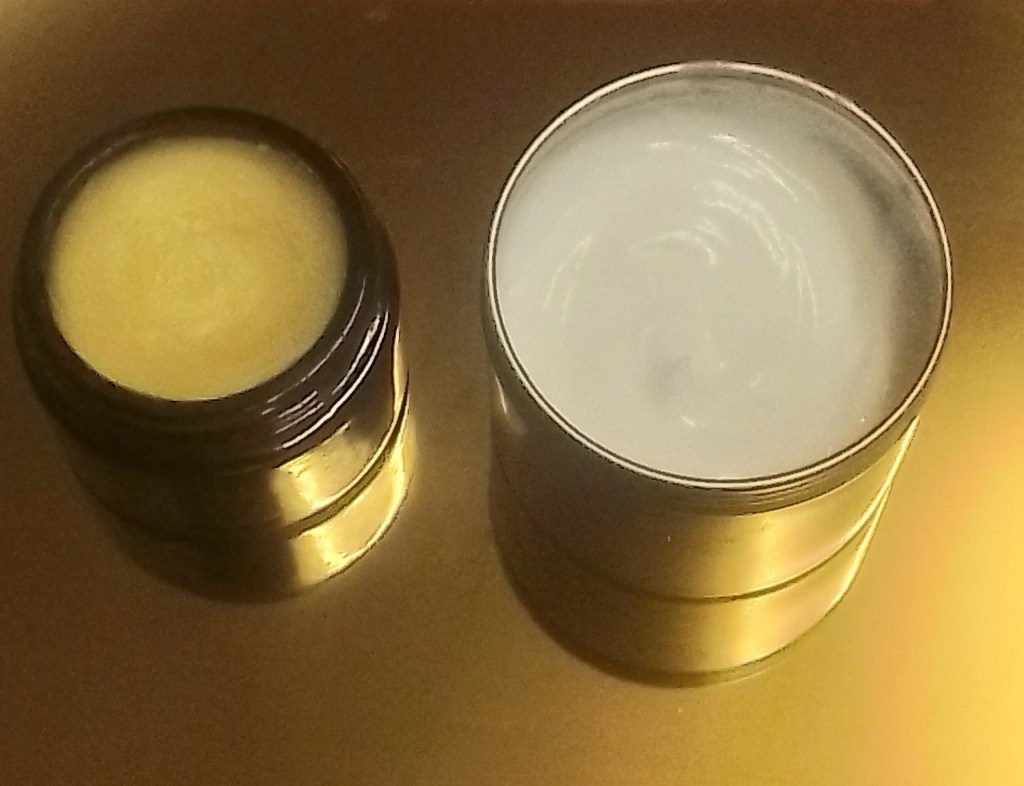
From experience I know what a pain having sensitive skin can be. It’s been many moons since I first started to formulate my own skin care. I started with perfumes, bath salts, bath oils, bath teas then and moved on to balms and then eventually creams and soaps. My sensitive skin would often come out in dry and itchy patches from many of the commercial self care products. Since I have been making my own products for my skin I have been able to manage my sensitive skin much more effectively whilst still enjoying scented and nourishing products. I have also been able to make skin care to support my friends and family when needed.
The benefits of creating your own skin care products and toiletries is you know what has gone into them and you can limit the amount of chemicals and man made products that go into it. When you make your own skin care you take control of what goes onto and into your skin. You can also save money because once you have your go to formulas and products you can buy the ingredients in bulk and cut out the cost of buying them done for you from the ships and department stores. You cut out the middle man and you can choose to create organic or vegan products or to even use ingredients that your ancestors or family used in the past or that is from the region of your ancestry. The cool thing is the possibilities are endless. You could choose to use products that support your genetic make up and or the region that you currently live in. For example you can infuse herbs and flowers that are suitable for the skin and grown in the area that you live. You could choose to recreate formulas that you remember your grandparents using. You can customise what you create to suit your specific skin type.
Both creams and balms require an oil as part of the base. A balm only requires oil and wax and a cream requires oil, water and an emulsifier and preservative. The emulsifier allows the oil and water to blend together. Balms are great for dry and sensitive skin as they can provide a barrier against outside influences that can trigger a skin reaction. Creams can replenish dry or dehydrated skin and provide a soothing action for inflammation and spots. I have found when used on my own skin, that the addition of essential oils in low doses such as below 3% also soothe rashes and reactions and allow them to clear up quickly.

You can use measuring spoons or a scale to weigh out your ingredients. Using scales allows you to replicate your formula to precision getting the exact same scent and feel each time. Using measuring spoons and counting drops of essential oils is a less accurate way of measuring out your ingredients however it can still produce a safe and stable product especially when the product does not contain water.
Before we get into how to make the balm and cream lets go over the ingredients and how you could adapt them to suit your own needs. We will start by looking at the oils for different types of sensitive skin. Skin can be oily and sensitive then become dry when reacting to an ingredient in a product. Sensitive skin can be any skin type in truth it could be oily, acne prone, dry, mature, combination or a mixture of any of the types mentioned. It’s great to start with a sensitive skin brief anyway because it means that if you were to create something for a friend as a gift then they would be less likely to react to it because it has already been designed to suit most skin types.
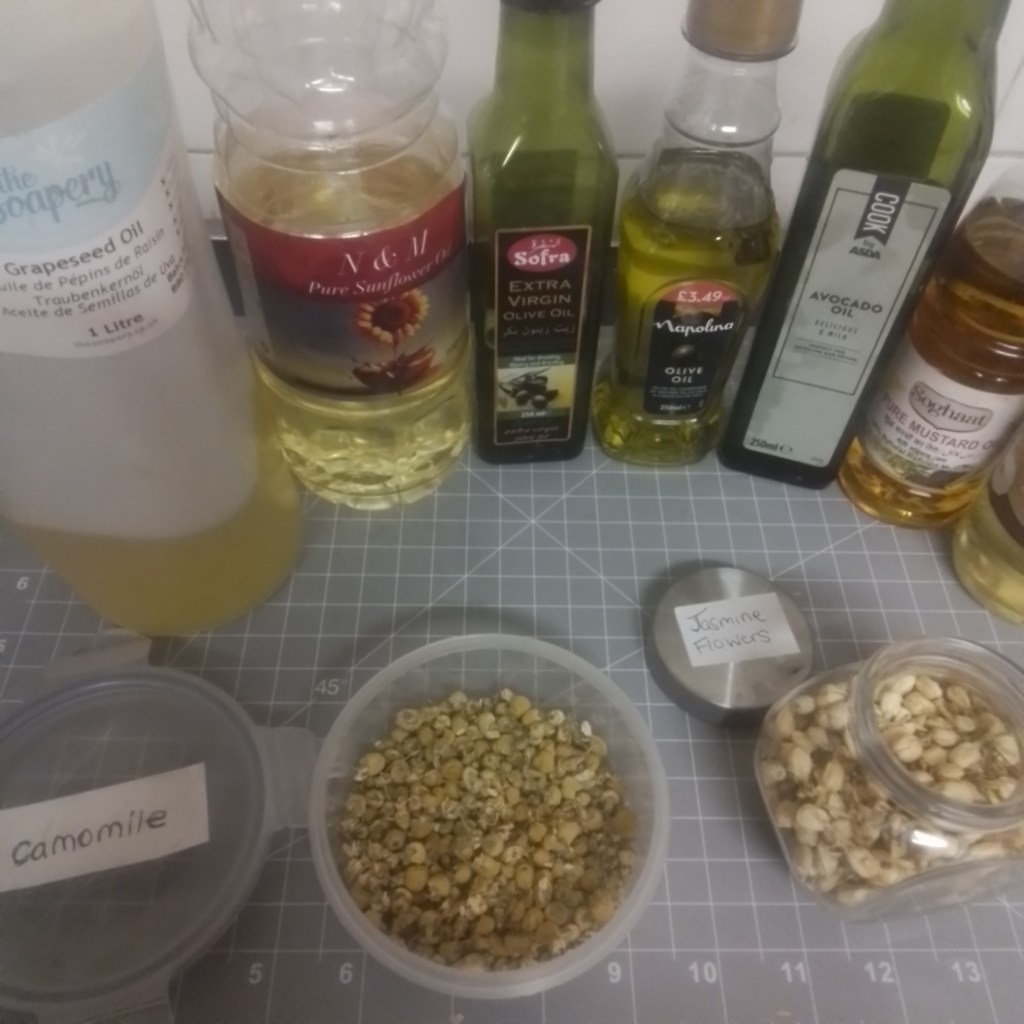
Best Facial Oils For Sensitive Skin
Jojoba
Jojoba is a wax that performs like an oil and is used interchangeably with oils. Jojoba is said to be like the skins natural sebum, it helps to support the skin barrier without blocking the pores. It is soothing, balancing, and suitable for reactive, acne-prone, or inflamed skin.
Best for: very sensitive skin, compromised barriers, acne-prone sensitivity
Sweet Almond Oil
Light, nourishing, and rich in vitamins A and E. Sweet almond oil softens the skin and helps relieve dryness and irritation. It is well tolerated by most sensitive skin types, though it should be avoided by those with nut allergies.
Best for: dry or tight sensitive skin
Apricot Kernel Oil
Apricot kernel oil is a light and gentle oil that makes a great moisturiser for people with mature and sensitive skin. Apricot Kernel oil supports elasticity and leaves the skin feeling soft without feeling heavy.
Best for: sensitive, delicate, or ageing skin
Sunflower Oil
Lightweight, gentle, and rich in linoleic acid and vitamin E. Sunflower oil supports the skin barrier, helps reduce moisture loss, and is well suited to sensitive or compromised skin. It absorbs easily without feeling heavy and is unlikely to clog pores, making it a versatile base oil.
Best for: sensitive, dry, or combination skin
Grapeseed Oil
Very light, fast-absorbing, and naturally high in linoleic acid and antioxidants. Grapeseed oil helps balance oil production, supports elasticity, and leaves the skin feeling smooth without residue. It is a popular choice for oily or blemish-prone skin due to its non-greasy feel.
Best for: oily, combination, or acne-prone skin
Sensitive-Skin Balm Base Formula 50 g
Grapeseed Oil 24g
Butters (Cocoa, Shea, Mango Butter) 20g
Beeswax 6g
To create the balm choose a carrier oil that will support your skin type. As the balm is designed for my own sensitive skin I have used Grapeseed Oil as it doesnt clog the pores and it leaves my skin soft and it isnt too greasy. Jasmine and Violet are a great combination for sensitive skin they also share similar and complementary qualities that creates a synergistic formula when they are used together.The white flowers of Jasmine are delicate small dainty. Jasmine has a host of attributes that make it a great skin care choice. It is hydrating, antiseptic and antibacterial which can support skin conditions like dryness, itching and eczema. Jasmine also contains phytol which is anti inflammatory. The Benzoic Acid and Benzyl Benzoate give Jasmine its anti fungal and anti oxidant properties. Jasmine contains Triterpenes which can protect from environmental damage and free radicals such as harmful UV rays. It is cicatrisant which can reduce the appearance of scarring. The Jasmine essential oil has a sweet smelling floral light airy scent which can also help to balance or uplift emotions.
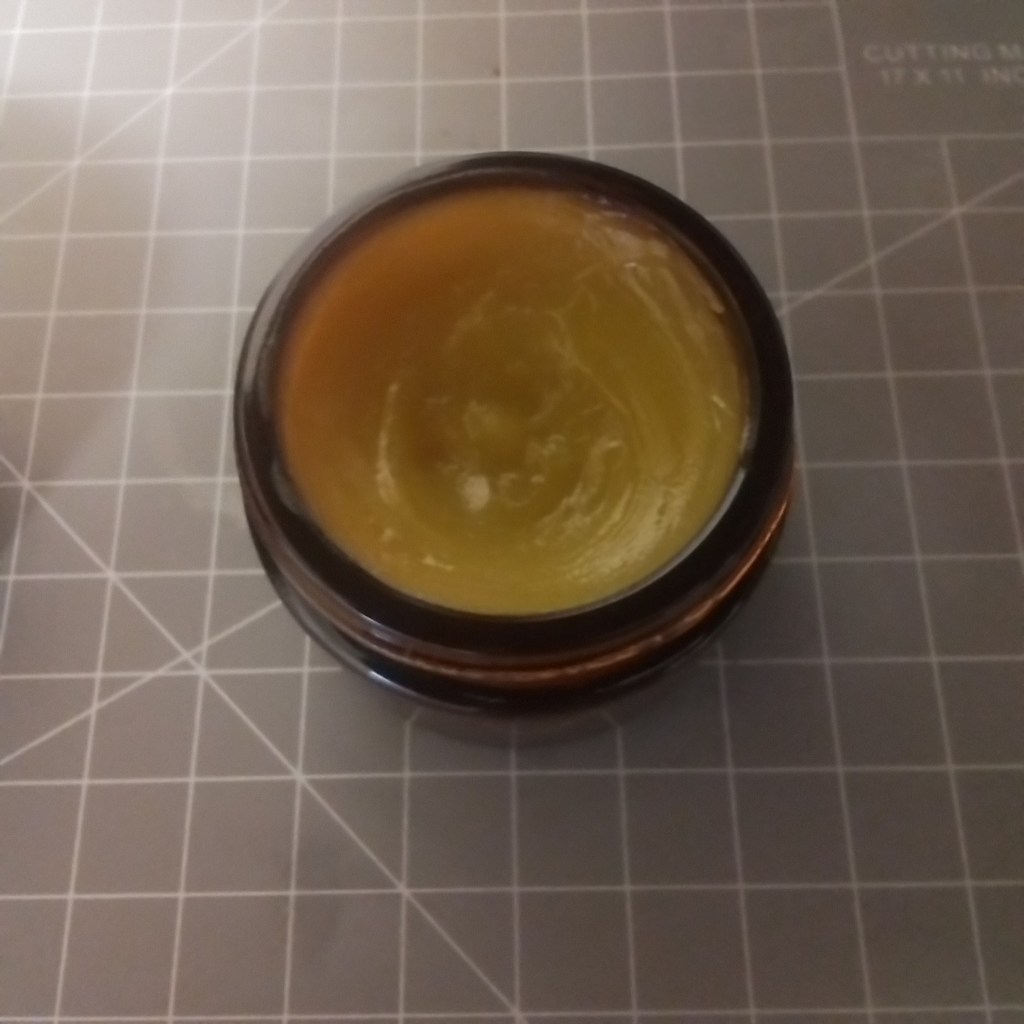
My Step By Step Process
Step-by-Step Process: Jasmine Infused Balm
Step 1: Preparation & Hygiene
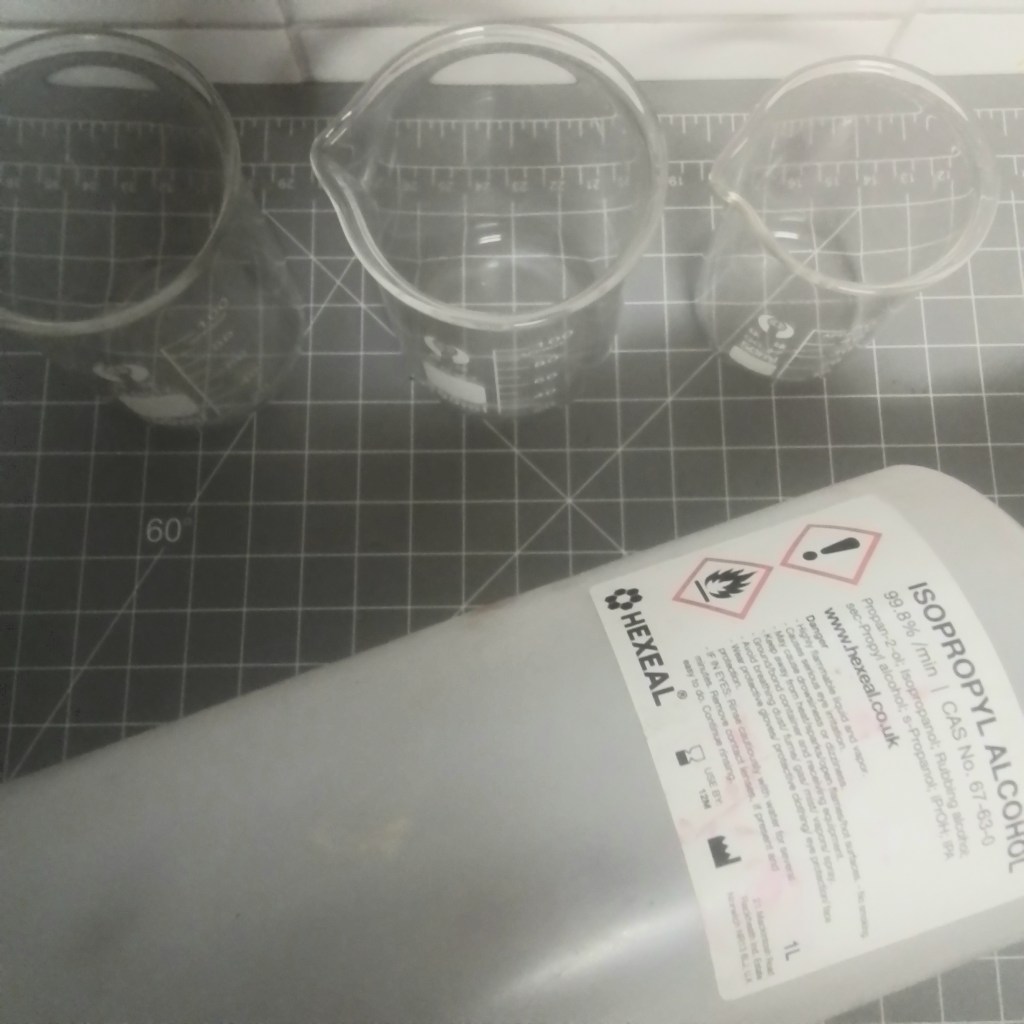
Before you begin, sterilise all equipment, jars, utensils, and surfaces using a 90% alcohol disinfectant. This reduces the risk of contamination and helps maintain the integrity of your finished balm.
Step 2: Create the Jasmine Infused Oil
Measure out 24 g of grapeseed oil (or another cosmetic or food-grade vegetable carrier oil).
Weigh 6.25 g of dried jasmine flowers and lightly shred, cut, or grind them to increase surface area.
Add the dried jasmine flowers to the carrier oil in a heat-safe glass jar or container. Cover loosely with a heat-safe lid, aluminium foil, or wrap.
Place the jar in a double boiler and heat on low to medium heat for 2–4 hours, ensuring the oil does not boil or overheat. This slow heat infusion allows the plant’s aromatic and energetic properties to infuse into the oil.
Once infused, strain the oil through a mesh sieve lined with cheesecloth to separate the plant material from the oil. Set the infused oil aside.
Step 3: Melt the Balm Base
In a heat-proof glass container, add:
- 20 g of butter (or a blend of two butters if desired)
- 6 g of beeswax
- 24 g of jasmine infused grapeseed oil
Place the container into a double boiler and heat the butters, wax and oil, gently on low to medium heat until the beeswax and butters are fully melted and combined.
Step 4: Cool Slightly Before Adding Essential Oils
Remove the melted mixture from heat and allow it to cool from hot to warm. This is an important step. Essential oils should not be added to very hot mixtures, as excessive heat can damage their aromatic and therapeutic properties or pose a safety risk due to their flash points.
You are aiming to add essential oils just before the mixture begins to set. When you see the first signs of thickening around the edges, this is the ideal time.
Step 5: Essential Oil Dilution
For this formula, a 1–3% dilution rate may be used, depending on skin sensitivity.
- 2% dilution = 2% of the total product weight in essential oils
- For a 50 g product, this equals 1 g total essential oils (approximately 20 drops)
An example blend:
- 12 drops Violet Leaf essential oil
- 8 drops Jasmine essential oil
For sensitive skin, a 1% dilution may be used instead:
- Approximately 10 drops total
- Equivalent to 1 drop per 5 g of product
Stir thoroughly to evenly distribute the essential oils throughout the balm.
Step 6: Pour & Set
Carefully pour the finished mixture into sterilised jars or tins. Allow the balm to cool and fully set at room temperature.
If the mixture hardens before you have finished pouring or adding essential oils, it can be gently re-melted using the double boiler or microwaved for a few seconds. Avoid repeated overheating where possible to preserve the quality of the oils.
Safety Note
Adding essential oils when the mixture is too hot can compromise the integrity of the formula. Concentrated oils are flammable and sensitive to heat. Always work slowly, mindfully, and with awareness of temperature changes throughout the process.
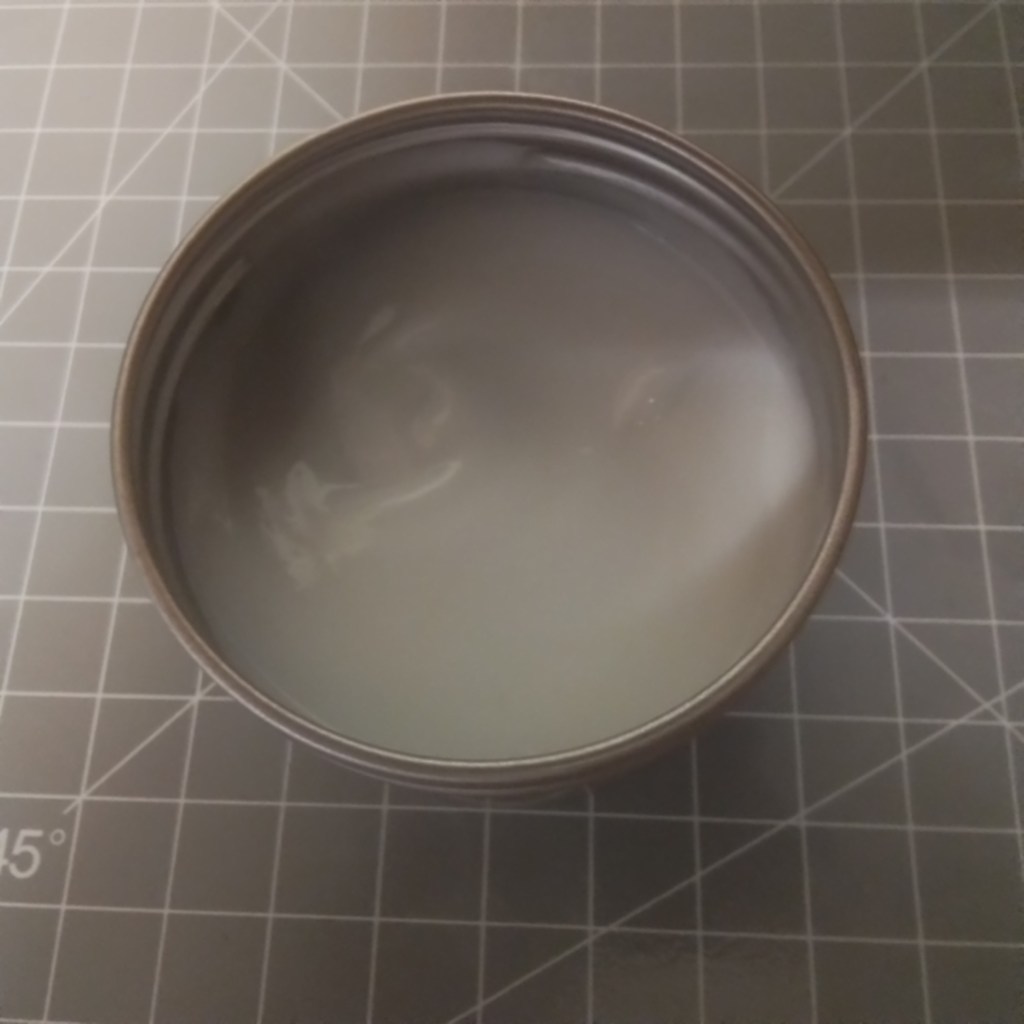
Sensitive-Skin Emulsion Cream Formula — 120 g
Rose water (Distilled water/Hydrosol)
70%→ 84 g
Sunflower Oil/Carrier oil blend (barrier-supportive oils)
20% → 24 g (I used 25g)
Emulsifying wax (gentle, non-ionic)
7% → 8.4 g (I used 8.47g)
Essential oils (sensitive-skin approved only)
2% → 2.4 g made up of 17 drops Jasmine, 12 drops Violet, 18 drops Sandalwood
Dried Violet flowers
2% → 2.4 g
Preservative (broad spectrum, low irritation)
1% → 1.2 g
Total: 120 g
Step-by-Step Process: Sensitive-Skin Emulsion Cream (120 g)
Step 1: Preparation & Hygiene
Before you begin, thoroughly clean and sterilise all equipment, utensils, containers, and work surfaces. Use a 70–90% alcohol disinfectant and allow everything to air dry. Proper hygiene is essential when working with water-based formulations.
Wash your hands and tie back hair. Work in a clean, uncluttered space
Step 2: Weigh the Ingredients
Accurate weighing is essential. Use a digital scale that measures to at least 0.1 g.
Water Phase (heated):
- Rose water (or distilled water): 84 g (70%)
Oil Phase (heated):
- Carrier oil (e.g. grapeseed, sunflower, or sweet almond): 24 g (20%)
- Emulsifying wax (e.g. Olivem 1000 or emulsifying wax NF): 8.4 g (7%)
Cool-Down Phase:
- Preservative (e.g. phenoxyethanol): 1.2 g (1%)
- Essential oils (optional, sensitive-skin safe): 2.4 g (2%)
(or reduce to 1% if desired)
Set each phase aside in separate heat-safe containers.
Step 4: Heat the Oil Phase
In a separate heat-safe container, combine the carrier oil and emulsifying wax.
Place into the same double boiler and heat to 70°C, stirring gently until the wax is fully melted.
Both phases should be at a similar temperature before combining.

Step 5: Emulsification
Once both phases are heated and fully liquid:
Slowly pour the oil phase into the water phase (or vice versa, depending on emulsifier instructions).
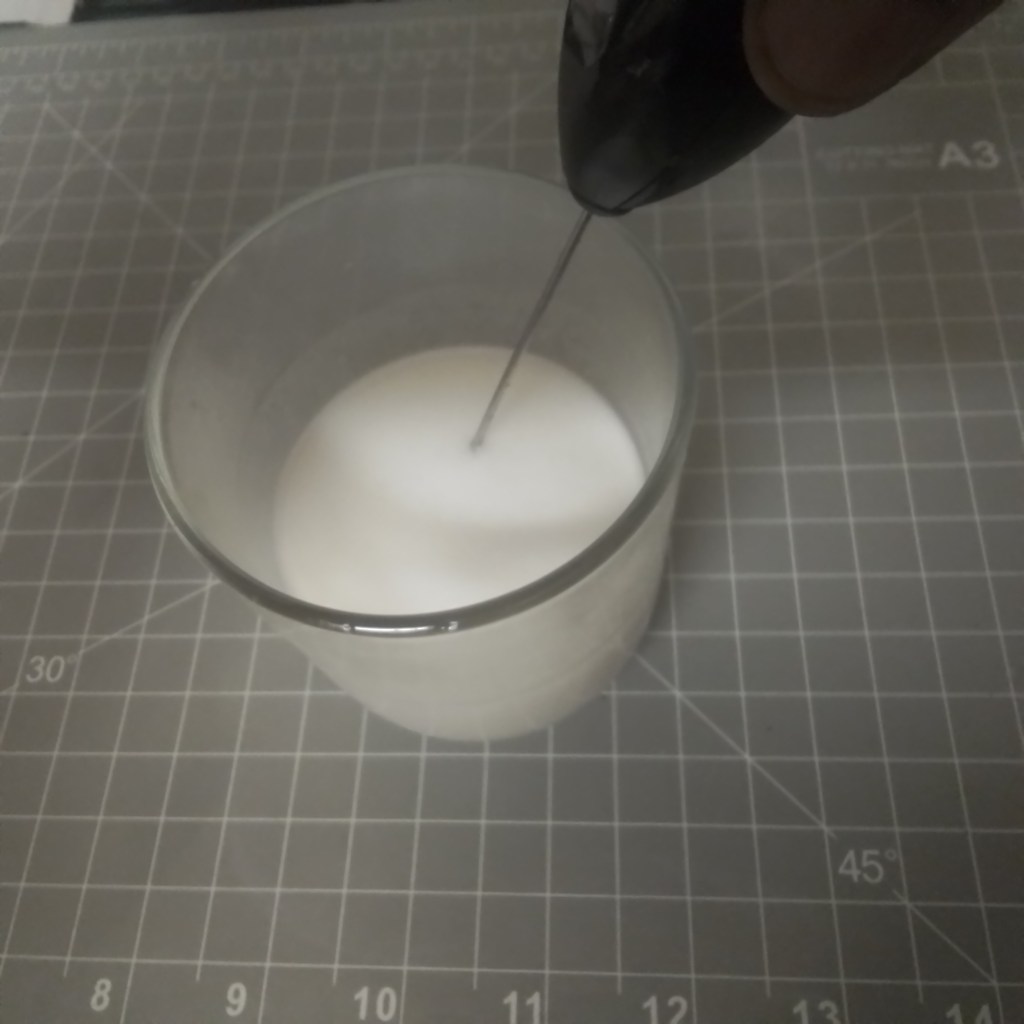
Immediately begin blending using a stick blender, mini whisk, or milk frother.
Blend for 1–3 minutes, until the mixture thickens and turns creamy and opaque.
Step 6: Cool & Stir
Allow the cream to cool slightly, stirring occasionally as it cools. This helps stabilise the emulsion and improves texture.
Do not add essential oils or preservatives while the mixture is still hot.
Step 7: Add Cool-Down Ingredients
Once the cream has cooled to below 40°C (warm, not hot):
- Add the preservative and stir thoroughly.
- Add essential oils if using, keeping within sensitive-skin-safe dilution rates.
Mix gently but thoroughly to ensure even distribution.
Step 8: Final Texture Check
Continue stirring as the cream cools to room temperature. The texture will continue to thicken and stabilise.
If the cream appears too thin, it may thicken further after 12–24 hours.
Step 9: Jar & Label
Transfer the finished cream into a sterilised jar or pump bottle.
Label with:
- Product name
- Ingredients
- Date made
- Batch reference (for learning records)
Step 10: Rest & Observe
Allow the cream to rest for 24 hours before assessing final texture, scent, and feel.
Store in a cool, dry place. Always patch test before personal use.
Important Educational Notes
- Water-based products must be preserved.
- This formulation is for learning and personal formulation practice, not for sale without proper cosmetic safety assessment and compliance.
- Sensitive skin benefits from minimal ingredients, gentle oils, and low essential oil percentages.
During the first quarter of 2026 I feel called to work with Violet, Jasmine and Hibiscus seperately and sometimes together. Jasmine brings through the fresh perspective and to me calls us to look on the brighter side of life. Hibiscus drives us to look inward at where our passion truly lies. Hibiscus asks us to go deeper like the richness of its colour. It wants to know are you bad ass enough to go after what you really want. Violet for me is much more subtle. I love Violet it easily lifts you up with its rich yet deep scent. Violet has a motherly vibe it’s comforting when you need to be uplifted or your going through something. It is used for grief. When Violet calls to you it might be because you need to feel and express something. Violet for me really has the loving mother energy, she feels like a supportive hug. Violet flowers and essential oil are good for oily, dry, irritated or itchy skin. Violet is moistening to the skin and it stimulates the lymph nodes which move fluid and waste out of thè body. It is antibacterial, antioxidant and antiseptic. Violets can be used in facial and body care products for anti ageing, wound healing and relieving dry or itchy conditions such as dermatitis, psoriasis, eczema and fungal skin conditions.
Below are some of the products I use, they are affiliate links so if you purchase I might earn a small commission which does not affect the cost to you.
Grapeseed Oil https://amzn.to/4aLfEdI
Beeswax https://amzn.to/4qFjr0M
Emulsifier Cetearyl Alcohol https://amzn.to/4jkqvgK
Dried Violet Leaf Flower https://amzn.to/4syUtSo
 Rose Priestess Energy Healing Training Online
Leave a comment