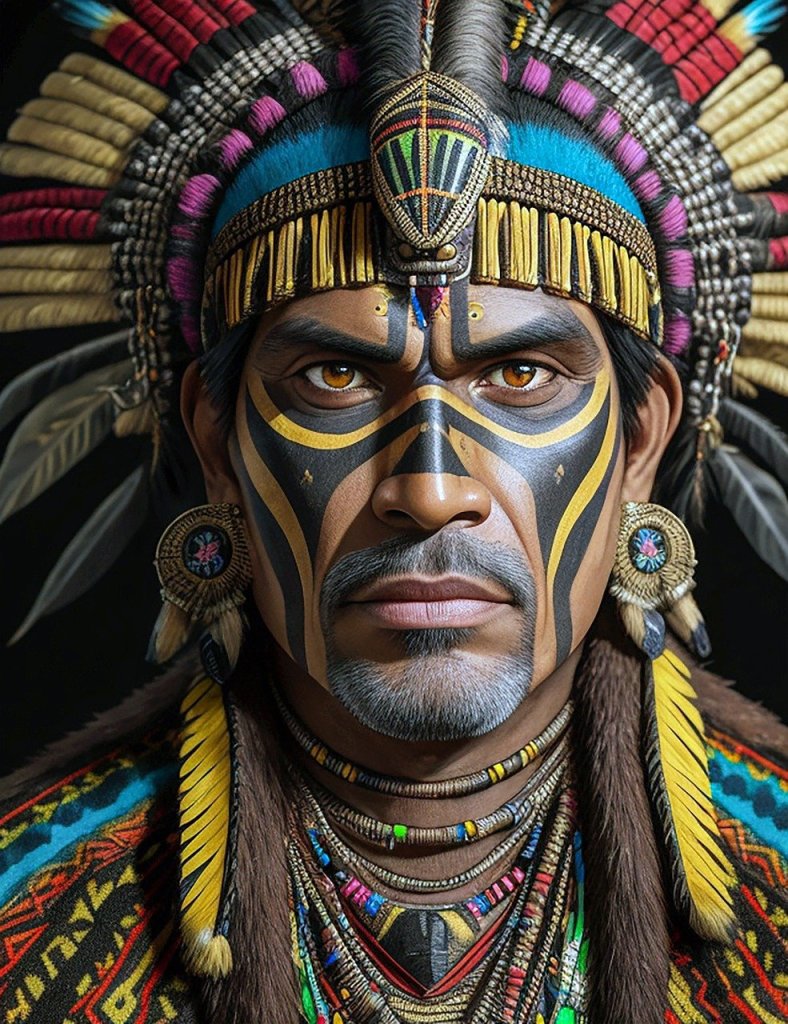
1.What is Shamanism?
Shamanism is an Indigenous practice that is used by ancient peoples across the world. There are different types of Shamanism. In Peru the Shaman’s are called “Paqos” or “Curanderas.” These Shamans will be specialists in one or more areas which can include Herbalism, working with a Mesa which is a healing bundle of sacred objects. The Shaman might be a specialist in divination or ritual and Ceremony work. Shamans work with the elements and objects found in the natural world to bring balance to their communities. In Tibet, Shamans are known as “Bonpo” or “Ngakpas.” This method of healing and spiritual work predates Buddhism and the Shaman would conduct rituals and communicate with spirits and perform divination, and spirit communication for the health and benefit of their community. In China, Shaman’s are called “Wu” or “Wu Shaman” Wu Shamans work with deities and the forces of nature for the benefit of the community.
2.How does Shamanism work?
Shamanism works by tapping into the forces found in nature and using them to bring balance to the environment and body. In particular Shaman’s in Peru believe that the body can be effected by Hucha which is dense and negative energy and that when we remove the dense energy from the body a person can experience better health mentally, physically, emotionally and spiritually. The opposite of Hucha is Sami which is refined pure light energy that can be cultivated and used to energise and uplift a person and their energetic body. Paqo Shamans also base their ways of working on Ayni which describes sacred reciprocity and veneration of Mother Earth and all that she provides.
When you start to work in a Shamanic way you begin to acknowledge and work with the energy of the elements acknowledging that we are made up of those same elements which are Earth, Water, Air, Fire and Ether. The Shaman’s belief system is that the earth called Pachamama should be respected and we should not just take and take from the earth. During the making of a Despacho a Shaman will gather together items such as sweets and coloured ribbons amongst other things and create a bundle that they burn as an offering to Pachamama mother earth. The Shaman acknowledges that mother earth provides so much for us and as part of their belief system they give back to mother earth. During ceremony the Shaman will call forth the energies and spirits of the 4 directions to guide them and assist them in their ceremony and healing work. Shamanism is a special relationship that is developed over a lifetime with the natural world. The Shaman will be an intermediary between the physical and spiritual world for the benefit of their communities and the world.
3.Is Shamanism a religion?
Shamanism is a spiritual practise that is not rooted in a central religious doctrine. Shaman’s across the world all work slightly different however their belief systems do play a part in how they work. Depending on which type of Shamanism you learn you will find the influence of their belief systems in particular deities are prevalent. The deities of the belief systems represent forces of nature. You do not necessarily have to worship the deities however working in a Shamanic way requires that you acknowledge and respect the different forces of nature that make up and influence our world. Shamanism is described as Animism in the West.
Animism is a belief system where it is believed that animals, flowers, herbs, rocks, the 4 elements and other elements of the natural world have a spiritual nature or soul essence that we can tap into and learn from.
4.Can anyone become a Shaman?
To become a Peruvian shaman you need to be initiated by a Shaman or be initiated by a Shaman spirit or be struck by lightning. In the West when we learn Shamanism we can incorporate the Shamanic practises into our healing work and become Shamanic Practitioners or Shamanic healers. It is my personal opinion that unless a Shaman gives you the title of Shaman then we should refer to ourselves as Shamanic Healers or Shamanic Energy Healers rather than Shamans and leave the title of Shaman to Indigenous shamans. When we learn Shamanism in the West we learn a variation of the true teachings that is doctored to suit us in the West. Some of the Shamanic practises are so sacred that they would not be shared with the rest of the world. A Shaman can spend decades learning his craft and taking a year long course could not possibly give us all of the knowledge that a Shaman will gain in a number of decades. Shamans learn from their natural environment and from the spirit world and we can learn alot by tapping into the resource system of the natural environment and the spiritual world ourselves. When we couple working directly with nature and theoretical study we get a better grasp of this wonderful and spiritually fulfilling modality.
5.What are Shamanic journeys?
A shaman will journey to one of 3 worlds the upper lower or middle world. The Shaman will get into an altered state of consciousness using drums or rattles or specific herbs to allow them to journey to one of the 3 worlds. The Shaman will journey to 1 of the 3 worlds to retrieve lost soul parts when a person has been traumatised and a piece of their soul has become stuck in the past. The Shaman will also assist people in Journeying to discover and find their power animal which is a spiritual allie and animal that can journey with you to the different worlds for healing and insight.
6.How can Shamanism benefit me?:
Shamanism allows you to connect to the natural world. Shamanism assists you in developing a spirtual practise that is personal and can assist in enlightenment and spiritual advancement. When you study Shamanism you can learn to connect to your natural environment and you can work on healing things in your past that are negatively affecting you. Working with Shamanic practices can also help you to heal generational imprints which are things that are passed down in your DNA like coding that cause you to act in a certain way that might have served humankind and your family hundreds of years ago but does not necessarily serve you here today. You can work on ancestral healing or personal healing and conduct rituals that leave you feeling more in tune with your body and your soul.
7.Are there different types of Shamanism?
Shamanism is a diverse practice with worldwide variations such as Indigenous Shamanism, Neo-Shamanism, and cross-cultural and regional variations.
Below is a list of different types of Shamanism
Siberian Shamanism
Korean Shamanism (Muism)
Japanese Shamanism (Shinto)
Native American Shamanism
South American Shamanism (Andean, Amazonian)
African Shamanism (Various traditions across the continent)
Australian Aboriginal Shamanism
Celtic Shamanism
Norse Shamanism (Seiðr)
Finnish Shamanism (Noaidi)
Inuit Shamanism
Tibetan Shamanism
Indonesian Shamanism (Dukun)
Hmong Shamanism
Chinese Shamanism (Wuism)
8.What are Shamanic tools?
The Shaman will use tools such as drums, whistles, rattles, flutes, bells, staffs(rods & wands) stones and crystals, herbs and natural objects in their healing, ritual and Ceremony work.
9. What can you do once you have learnt the basics of Shamanism?
Once you have learnt the basics of Shamanism you can delve deeper into areas that interest you such as Herbalism, Sound Healing, Shamanic Journeying, Soul Retrieval, Guided Meditations, Energy Healing, Nawri Balancing (Chakra balancing) Journeying with Essential Oils, Working with the 4 Elements, conduct ceremonies and rituals, Medicine Wheel Coaching and Exploration, Aromatherapy and Natural Energy Healing Products.
10.How can I learn more about Shamanism?
You can learn more about Shamanism by reading books and taking online classes and workshops. You can research on Youtube and Google and find areas to dive deeper into. You can also take attunements of different Shamanic energy systems that can open you up to experiencing the different energies and unlock your own Shamanic skills and path.
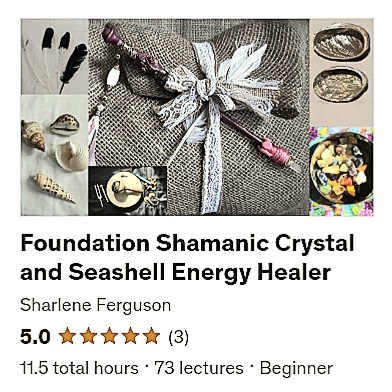
Until the 5th March you can get my Foundation Shamanic & Seashell Energy Healer course for £14.99. This course walks you through the basics of Shamanism and then moves on to advanced Crystal and Seashell Energy Healing using Shamanic techniques to provide an Energy Healing service for others.
Click the below link to get the course at a discounted rate until the 5th March 2024


Leave a Reply