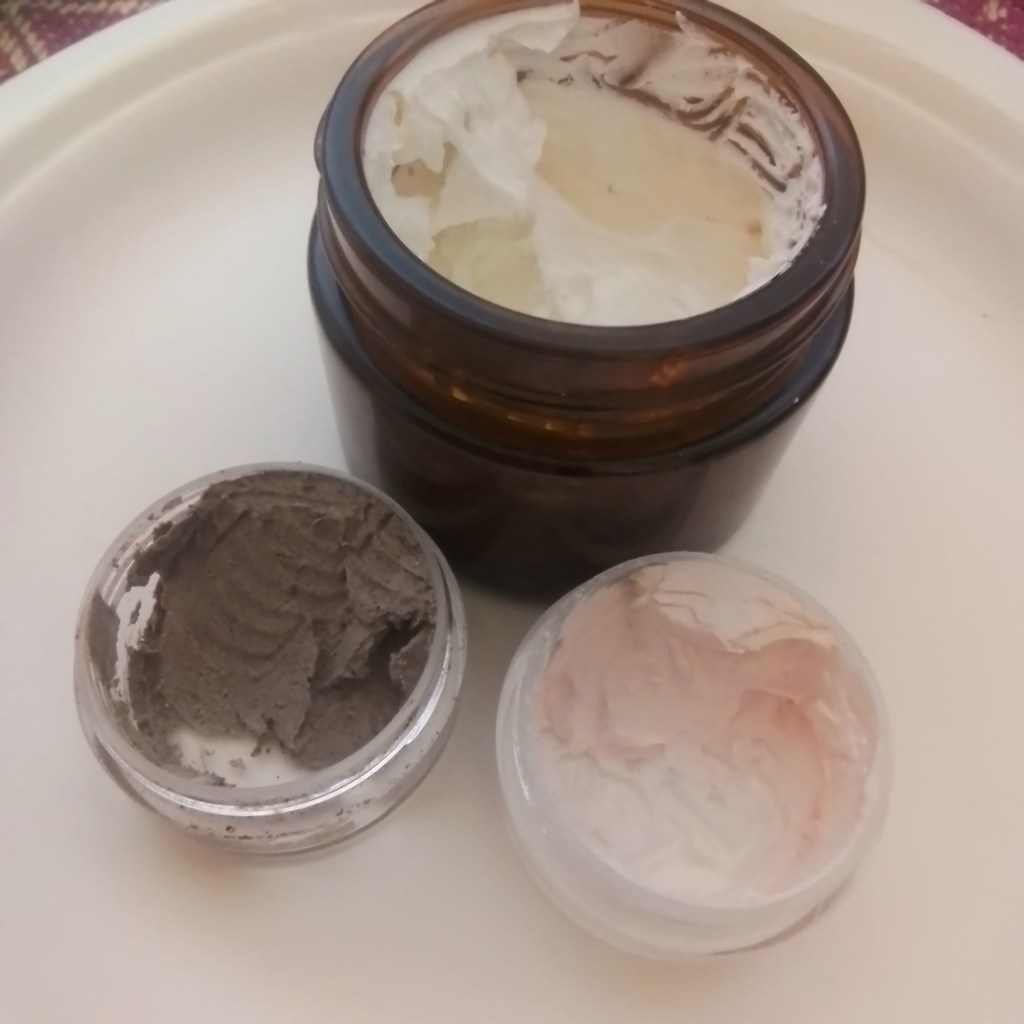
As it heats up in my neck of the woods many people are scrambling to find their sunblock which got me to thinking about how hard or easy it would be to make my own. I have been experimenting with making creams this year and I’ve got my base cream down. Turns out it’s not so difficult to make a sun cream. The above creams contain 19% Non Nano Zinc which provides a protective barrier on the skin. Below you will find how I made a small batches of 3 suncreams from scratch with an approximate SPF of 40%, 20% and 13% and what I used to make them. Note my creams have not been tested in a lab and so I cannot give an exact SPF. I made these cream as I love making skin care products for myself and friends and I am also developing my skills for fun.
A basic cream formula can be achieved by using as close to a 50/50 ratio of oils and water for a nourishing and hydrating cream. When water is added to a cream you have to have a preservative. I use hydrosols instead of tap water this further reduces the possibility that the cream will go mouldy. Water based creams are good for people who want a light moisturiser. When creating a cream formula more water can be used if the skin is dry to provide actual hydration to the skin.
50% Water
39% Oil or Oils and butters
10% Emulsifier
1% Preservative
Here’s a short video showing how to make a Cream or Sun cream.
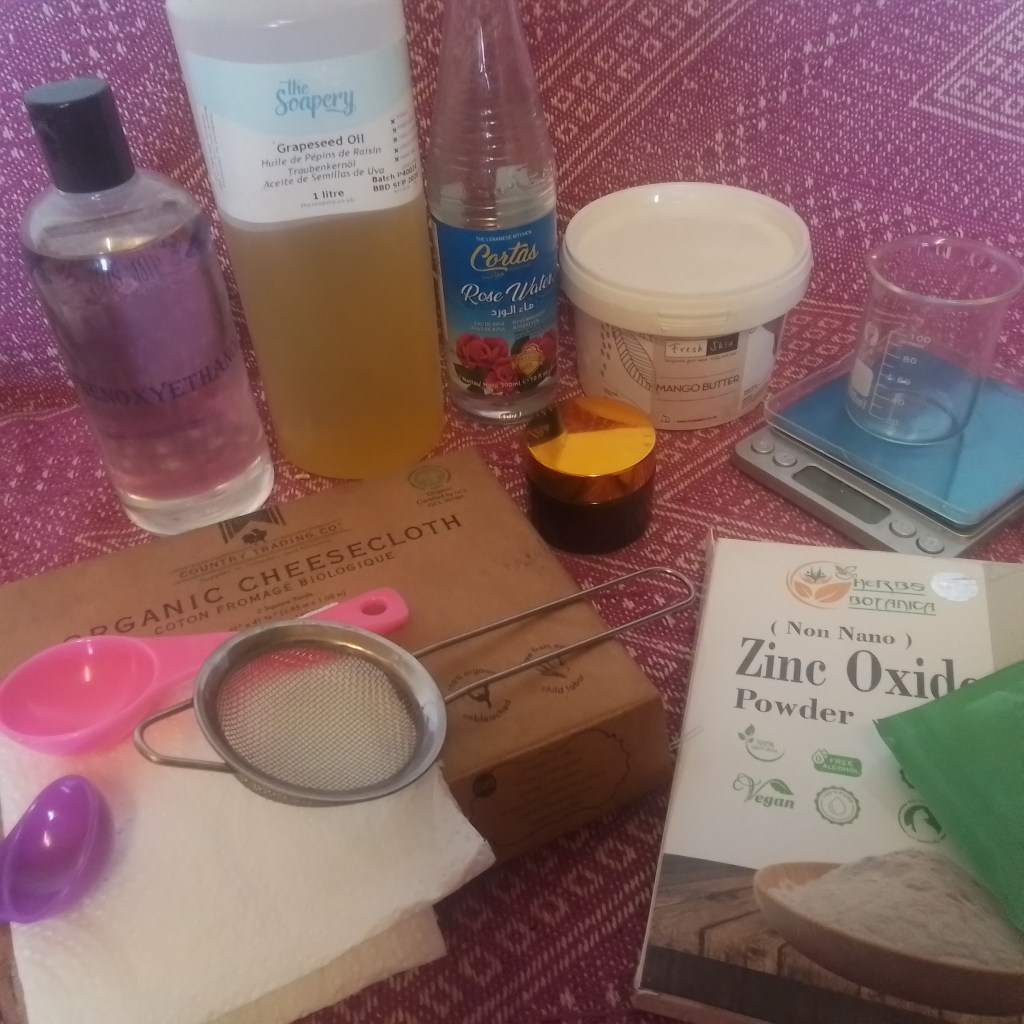
The 40% sun cream formula:
20-40% Non Nano Zinc at 40% it’s very thick I had to add more oil to loosen it up. 40% 20g
14.50%-35% infused oil or infused oils and butters 14.50% 7.0g
25-30% Rose water (or distilled water or Orange Blossom Water don’t use tap water even if its boiled)
5%-10% Emulsifier
0.5%-1% Preservative
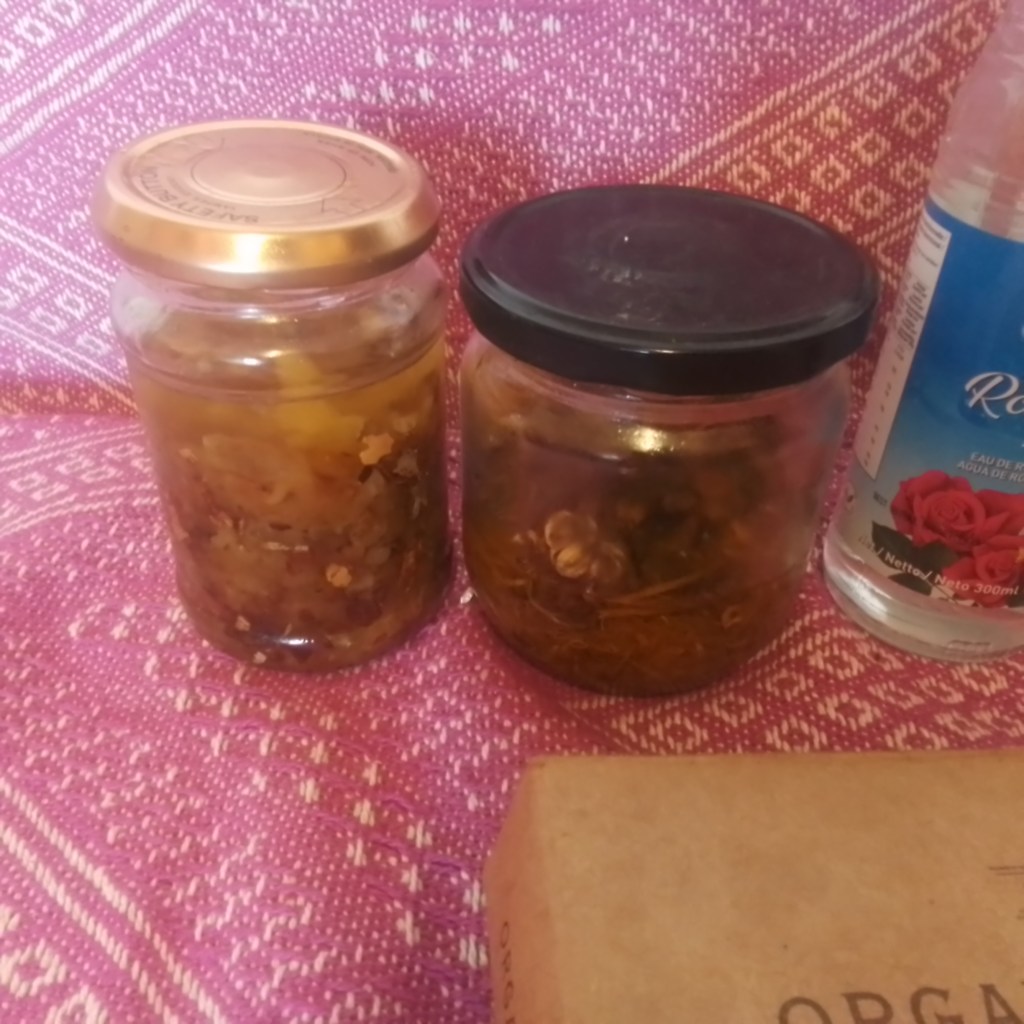
What I actually used for my 40% SPF approximate
14.50g Frankincense Infused Oil and Calendula Infused Oil
12g Rose Water
20g Non Nano Zinc
3g Ceterayl Emulsifier
0.5g Preservative
The suncream was very thick and I made it for my children as the school is adamant all the children need sun cream, we probably don’t need sun cream were very dark melaninated people, but I wanted to make my own for incase we had a really hot day and for days when we will be out in the sun all day it’s good to have on hand. I added more oil to loosen up the cream. It is recommended that children have an SPF of atleast 50%. The Non Nano Zinc provides a coat of protection it leaves a whitish film on the skin. I experimented with a 13% ratio of Non Nano Zinc in my master base cream blend and 20% with the inclusion of Mango Butter. The 13% spf roughly (not lab tested strictly for personal use) of the cream would be good for all other seasons except summer where you might need something stronger.
How to Make the 20% SPF Cream
7.0g Mango Butter
8g Frankincense Infused oil optional or plain Grapeseed Oil
15g Rose Water
10g Ceterayl Emulsifier
10g Non Nano Zinc
0.5g Preservative
1.Melt the Butters, Oils and Emulsifier in one beaker or jar at the same time heat the distilled water in a seperate beaker or jar.
2.Heat the distilled water or Hydrosol-Rose Water and Oil and Butters to the same temperature in their seperate beakers.
3. Combine the water and oil whilst whisking the formula and add your Non Nano Zinc and blend well. You can add oil to loosen it if needed.
4. Add your preservative.
I coloured one of my tester samples of the cream pink with mica and the other one I coloured with Cinnamon and Cacao. You can colour or tint your creams with mica powder, turmeric, cinnamon, a Crushed eyeshadow or blush, rose powder or bentonite clay.
Below is a more detailed look at the process.
If your making an Infusion for example a Lavender or Rose oil Infusion (you can use any dried herbs or flowers suitable for the skin) place these in a glass jar that has a lid and cover with your chosen oil and heat on a medium or low heat for 2-3 hours.
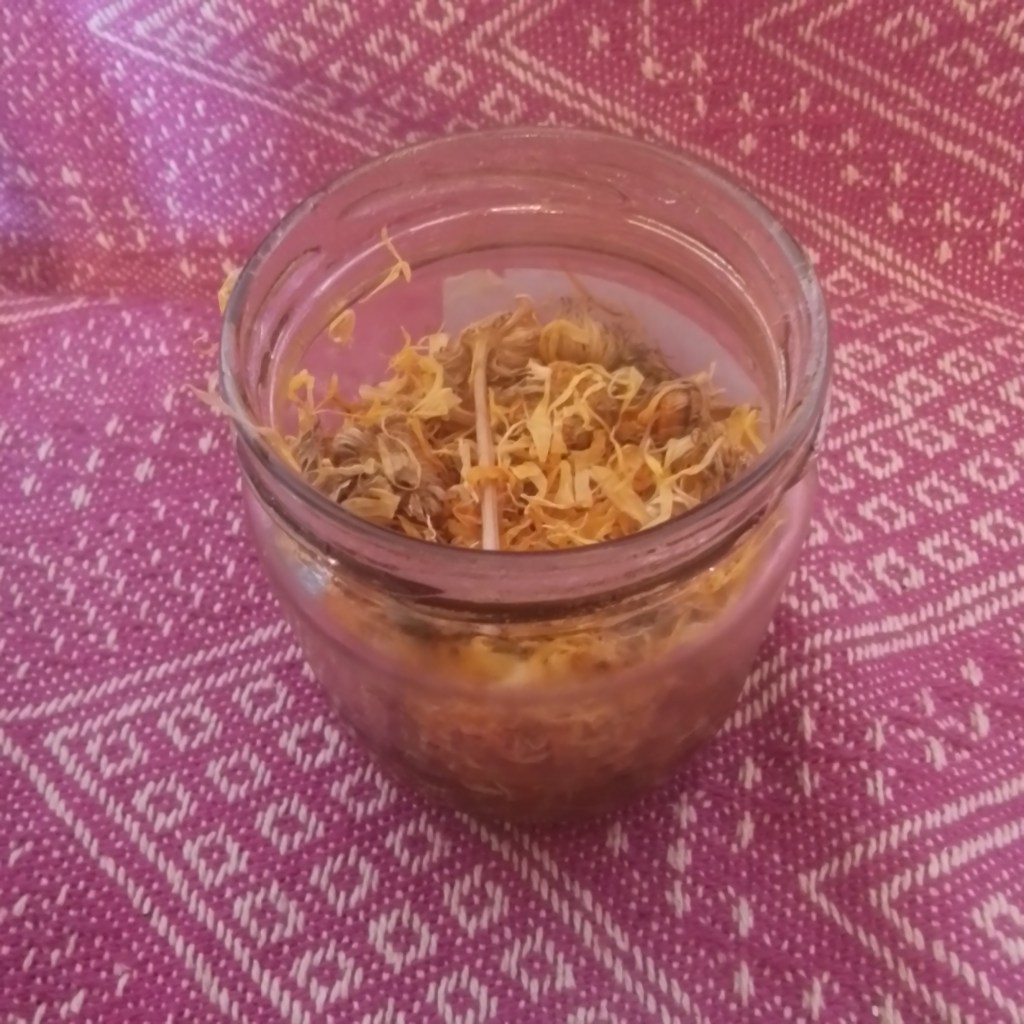
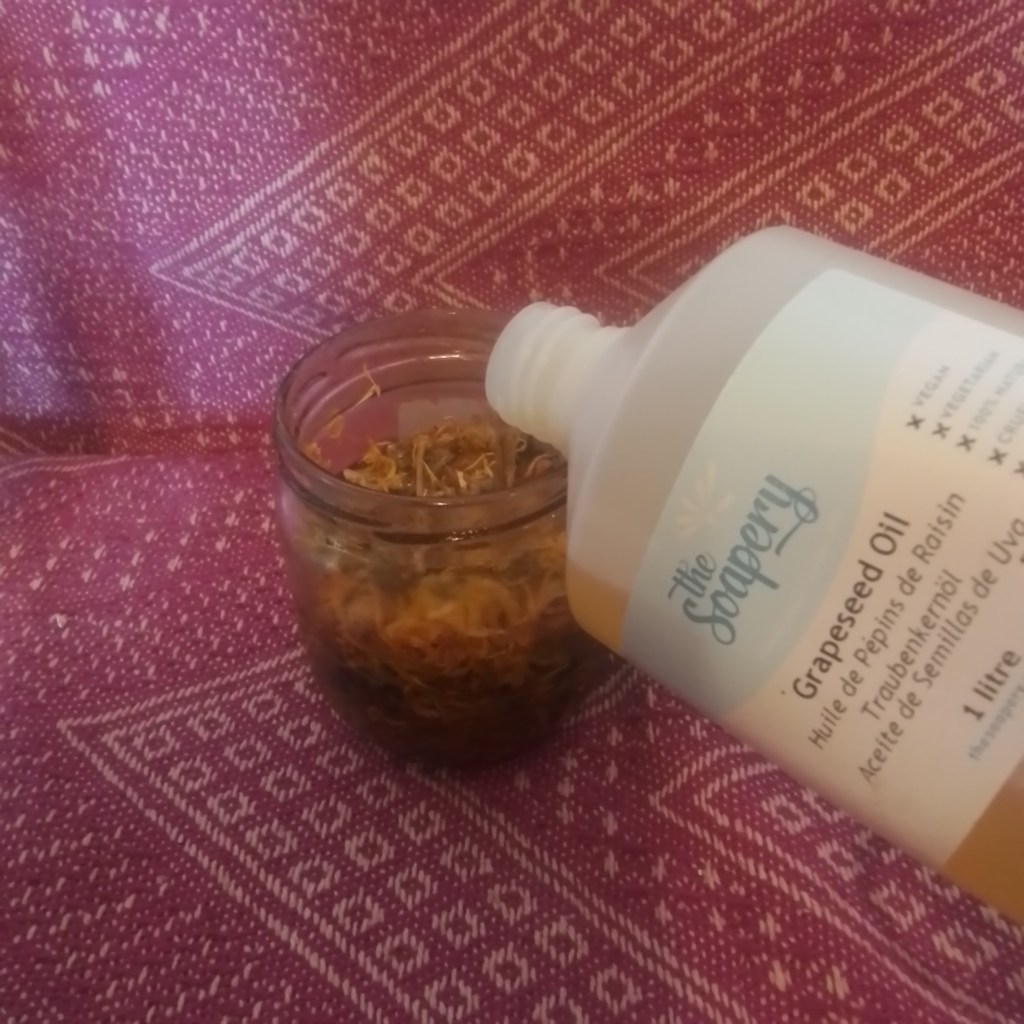
Strain your oil through a fine metal strainer or a cheese cloth on top of a strainer into a new clean jar or beaker. The oil will have taken on the properties of the flowers and certain constituents will have extracted into the oil. You now have your oil Infusion.
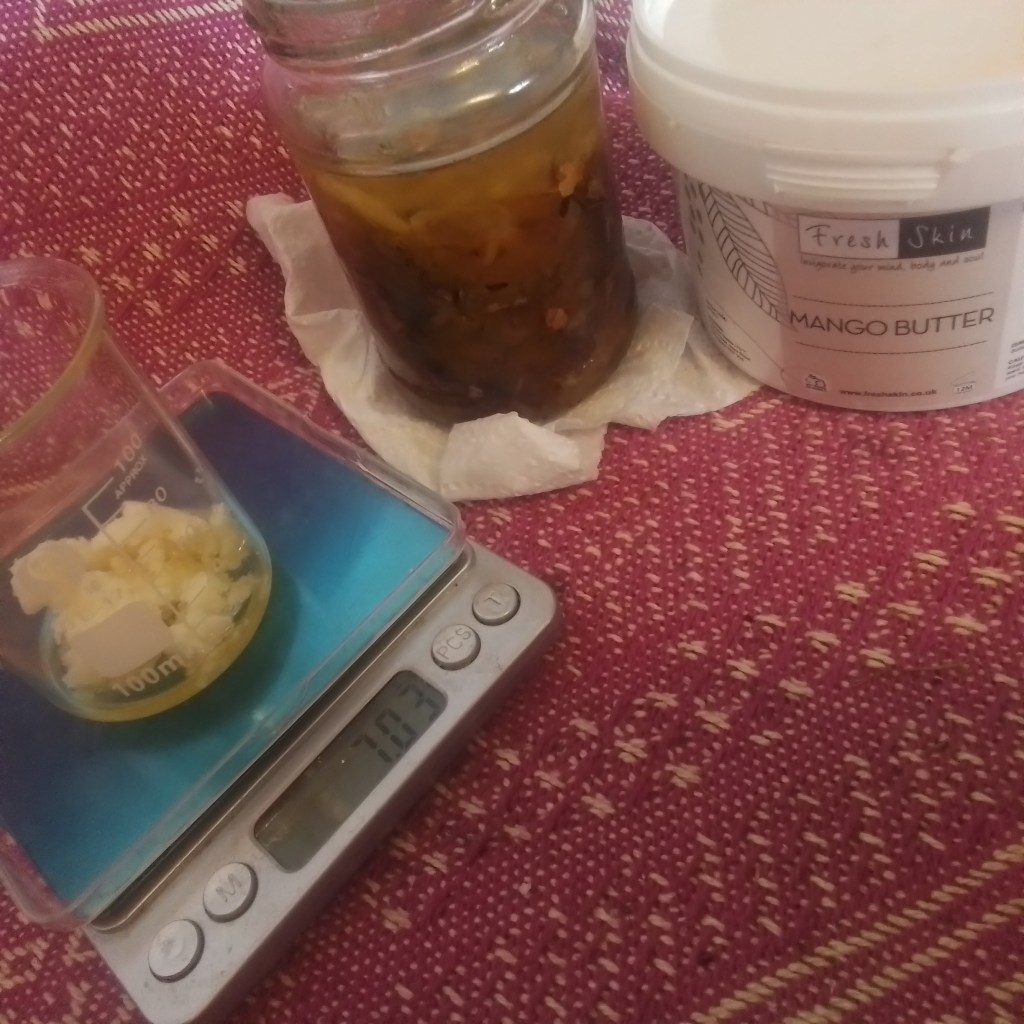
You can use a jewellery scales for accuracy or measure in teaspoons 5g or use a beaker with measurements. If your not making an oil Infusion first go ahead and pour your oil into a glass jar with a lid and add your Emulsifier. The Emulsifier allows the oil and water to combine later as oil and water don’t mix without an Emulsifier. To my oil Infusion I add the 3g of Ceterayl and I add the Rose Water to a seperate beaker with the Preservative as my preservative can can be used with heat. I cover both jars with a lid or tin foil. You heat both to the same temperature. This can be done with a thermometer however I dont use one.
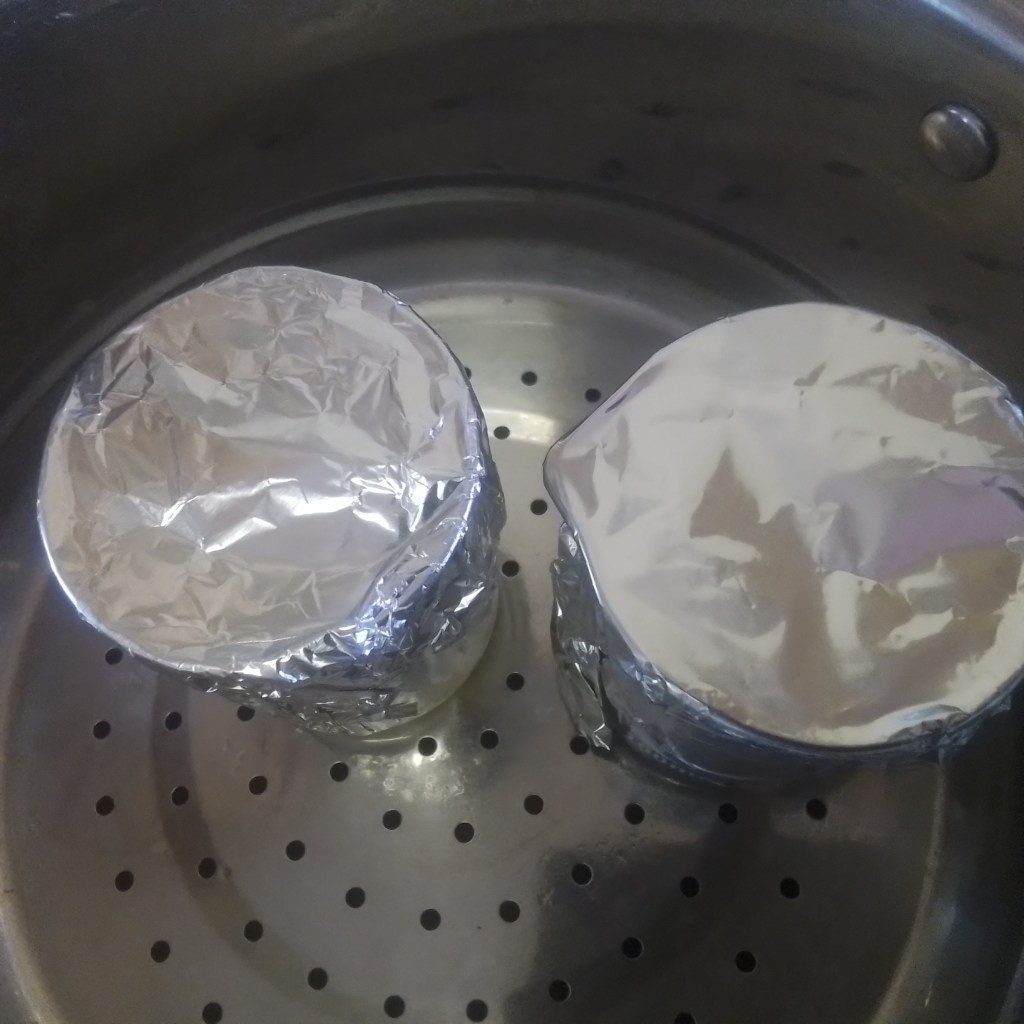
I check the temperature of both the glass jars, the water will always heat the fastest so I heat in a double boiler or steamer until both liquids are at the same temperature. I take the water off when it heats to the same temperature as the oil and allow the Ceterayl to melt into the oil.
I add the water back onto the heat to bring it back up to the same temperature as the oil once the emulsifier has melted.
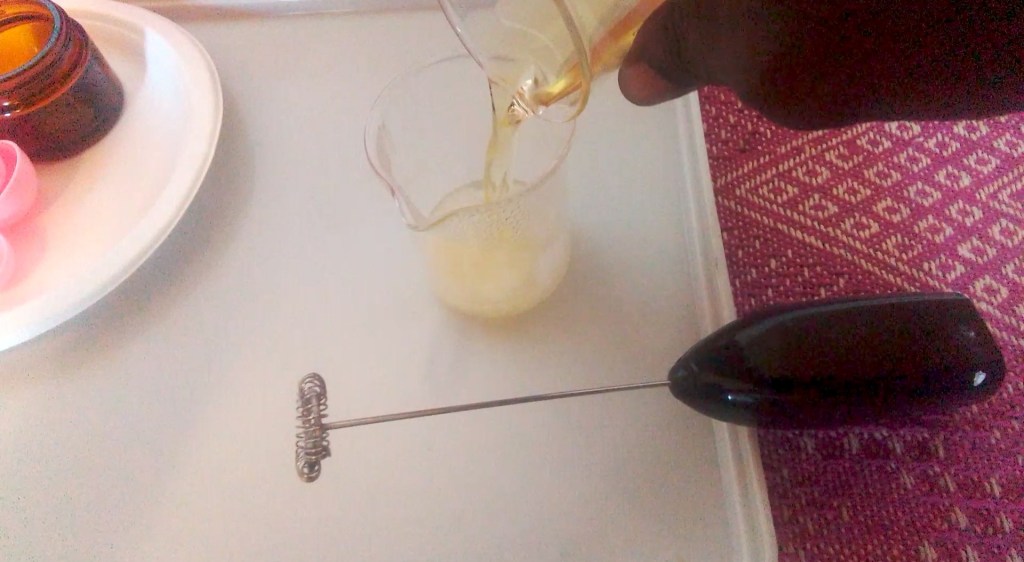
Once both jars are at the same temperature I pour the water into the oil and whisk it with a coffee frother, you can use a hand mixer or electric mixer. I only make small batches but for bigger batches you can just double or triple the quantities. I mix the water and oil now in the same jar until it is well blended and it starts to thicken up. I put it in the fridge it can be left in the fridge for 1-24 hours then mix again and put it back in the fridge. The cream will get thicker over 3 days whether it is left in the fridge or not. This cream is great for providing a barrier for example for nappy rash you could use less non nano Zinc such as 20-30% at it would make a great nappy cream if you checked suitable doses for babies. I have not made a nappy cream however I have made a basic Balm which contains butters and chamomile infused herbs for itchy skin for babies and will be making a cream. The great thing about making your own cream is that you can tailor it to your own specific needs or the needs of a specific friend or family member. It took me less than hour to make the sun cream and it works. As we are dark skinned I apply my high water content cream over the top and there is less White residue. I tried the cream on my son and you can see that it has provided a barrier on the skin and it also feeds and hydrates the skin with the Rosewater. I will store my cream in the fridge and use it over the Summer (8 weeks).
I experimented with 3 different creams with a 13% Nano Zinc Oxide, 20% and 40% using different ratios of oils and butters and Rose water. The 13% could probably used in Autumn/Fall where we might get small bought of sunshine. The water based creams (in which I have only used Rose Water) as a base are light and airy yet moisturising.
Here is a basic 50g sun cream formula:
39% Rose Water e.g 19.49g approx
30.0 % Herb/Flower infused oil 15g approx or 7.5g oil 7.5g butters
10% Emulsifier 5g approx
20% Non Nano Zinc 10g approx
1% Preservative 0.5g approx
Below you will find information on the ingredients.
The Non Nano Zinc acts as a barrier on the skin which is perfect for when you are out in the sun. Non Nano Zinc sits on the skin and you can visibly see it acting as a coating or barrier as a white residue on the skin. To add it to the cream formula reduce the formula by the SPF % reduce the oils and water content depending on your requirements. SPF 40 would mean reducing my cream formula by 40% or 20g in a 50g container.
40% Rose water or distilled water e.g 20g
A note about the water element of the cream. In the cream I highly recommend you stay away from tap water even if it is boiled. If you leave tap water in a glass for a week or more it will start to grow bacteria and mould and we do not want that happening in the cream. It is the water element that means that we need a preservative. For many years I stayed away from making water based products because when you add water into a blend you heighten the risk of bacteria growth. For this reason I used Rose Water or any Hydrosol which is the water bi- product that is produced when the essential oil is extracted from the flower or plant. The food grade water will already have its own preservative and will have been tested for stability. The distilled water is also produced in a way that removes those microbes that might grow in water. I use food grade hydrosols and abide by the Ayurvedic and Asian Philosophy to only use products that you can eat or as much of those types of products within my formulas as possible. I use organic loose herbs and flowers that are designed for teas or cakes and the rosewater is designed for food. I use food grade oils but I actually prefer to purchase my oils and butters for skin care from skin care ingredient wholesalers or soap maker companies. I use the company fresh skin as a book I have on creating skin care and perfume the lady who runs the company Plush Folly recommended that company.
SPF
SPF 30 or higher is generally recommended.
SPF 30 blocks about 97% of UVB rays, while SPF 50 blocks about 98%.
Choose broad-spectrum (protects against both UVA and UVB).
Water-resistant is important if swimming or sweating.
Best for:
Sensitive skin or conditions like melasma: SPF 50–100
Daily wear (indoors/outdoors): SPF 30
Prolonged outdoor exposure (beach, hiking): SPF 50+
Children (6 months and older)
- SPF 50+ is recommended.
- Always broad-spectrum and mineral-based (zinc oxide or titanium dioxide preferred).
- Avoid chemical filters like oxybenzone or avobenzone for young skin.
For infants under 6 months:
- Avoid sun exposure entirely; use protective clothing and shade rather than sunscreen.
I recommend Non Nano Zinc but I have seen online that some people do not see what all of the fuss is about with Nano Zinc but as my creams are used on my children I go for the most natural and non toxic products when making skin care.
Nano Zinc Oxide – I don’t recommend this one for the cream!
- Particle Size: Less than 100 nanometers (nm)
- Appearance: Transparent or invisible on the skin
- Use in Sunscreens: Often used in modern formulations to avoid the white cast
- Skin Penetration: Designed to stay on the surface, but some studies raise concerns about potential penetration into deeper layers of the skin (especially broken or compromised skin)
- UV Protection: Effective for UVA and UVB, but may offer slightly less UVA protection than non-nano due to particle size
Pros:
- No white residue
- Lightweight feel
- More cosmetically elegant
Concerns:
- Potential to enter the bloodstream or lungs if inhaled (as in sprays or powders)
- Environmental concerns—nano particles may be more toxic to aquatic life.
Non-Nano Zinc Oxide– What I used
- Particle Size: Larger than 100 nanometers
- Appearance: Leaves a white cast on the skin, especially on darker tones
- Use in Sunscreens: Preferred in natural and mineral-based products for safety
- Skin Penetration: Does not penetrate the skin—remains on the surface, making it the safest option, especially for babies, sensitive skin, and coral reefs
- UV Protection: Offers excellent broad-spectrum protection, especially UVA
Pros:
- Considered safer for human health
- Gentle on sensitive and damaged skin
- Reef-safe (as per most environmental guidelines)
Cons:
- Thicker application
- White cast may be undesirable for some users
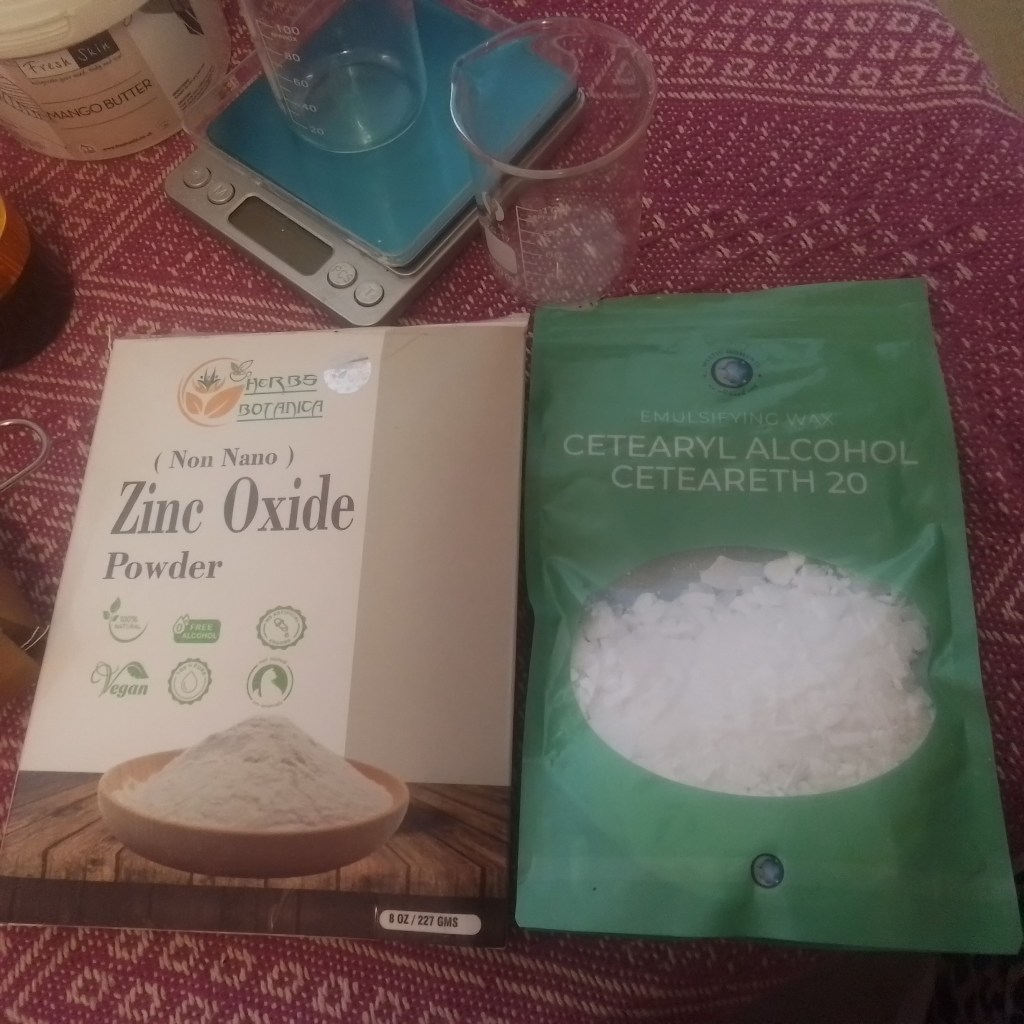
When Cetearyl Alcohol and Ceteareth-20 are combined in a cream formulation, (shown in the green packet) they help the cream to be stable, smooth and silky. This blend is commonly used in both natural and professional skincare products.
Here is a detailed explanation of their combined benefits:
1. Effective Emulsification
Together, Cetearyl Alcohol and Ceteareth-20 form an emulsifying wax that binds oil and water components into a stable emulsion. Ceteareth-20 is a non-ionic surfactant that reduces surface tension, while Cetearyl Alcohol helps maintain the integrity of the emulsion.
Benefit: This ensures your cream doesn’t separate over time and maintains a uniform consistency, which is critical for shelf stability and product quality.
Benefits in Cream Formulations:
Enhances product shelf life and consistency
Creates a stable oil-in-water emulsion
Adds a smooth, creamy, luxurious texture
Conditions and softens the skin
Supports the delivery of active and spiritual ingredients
Improves spreadability and absorption
Provides a non-greasy, elegant finish
Cetearyl Emulsifying Wax NF
1. Emulsifies Oil and Water
Cetearyl Emulsifying Wax NF is used to create a stable emulsion—this means it allows oil and water, two normally immiscible substances, to blend and remain combined. In skincare, this is essential for making smooth, stable creams that won’t separate over time.
In a basic formulation, the oil phase (such as plant oils, butters, or waxes) and the water phase (such as floral waters, aloe vera juice, or distilled water) are heated separately. The emulsifying wax is added to the oil phase, and once combined with the water phase, it acts as the binding agent that ensures a uniform, creamy texture.
2. Thickens and Stabilizes the Formula
In addition to emulsifying, this wax also contributes to the viscosity and body of the cream. It helps produce a cream that is rich and smooth without being overly greasy or heavy. This makes it ideal for face creams, where a delicate balance between hydration and absorption is important.
3. Softens and Conditions the Skin
Cetearyl Emulsifying Wax NF contains fatty alcohols that also serve as emollients, providing a soft, silky feel to the skin. These compounds help lock in moisture by forming a light, breathable barrier on the skin’s surface, making the cream more nourishing and long-lasting in its effects.
Why Use It in Natural Skincare?
Cetearyl Emulsifying Wax NF is a preferred emulsifier for those creating natural or plant-based formulations because:
- It is non-irritating and suitable for sensitive skin
- It is stable and reliable, creating consistent textures
- It blends well with botanical oils, herbal infusions, hydrosols, and essential oils
- It does not leave a heavy or waxy residue
This makes it an excellent base for holistic skincare products such as anointing creams, goddess beauty balms, or plant-spirit-infused moisturizers.
You can also just add Non Nano Zinc to your current cream to add sun protection to it.


Leave a Reply