
As we look forward to Spring and Summer in the Northern Hemisphere the daffodils are back. The pops of yellow colour and tall green stems set against grass left to its own devices are beginning to show their heads. Yes I have for the first time planted my own Daffodils, lots in fact, in pots around my garden. 2 single bulbs have come to bloom as we speak big bold unapologetic and beautiful. Now Daffodil though pretty to look at contains a toxic chemical that we don’t want to ingest so its off the menu, I’m afraid! Daffodils should also be handled with care as they may cause skin irritation in some people. Daffodil can turn vegetables toxic and the water from a Daffodil filled vase is also toxic. It’s not all doom and gloom, Daffodils are joyful looking flowers. For me they bring back many child hood memories of carefully choosing and picking the best, tallest Daffodil for Mothers day. It was at school at around 4-5 years old that we started doing this and we did it for many years. Daffodil picking is a cherished memory for me. These days picking flowers on private land or council parks are banned however in my day we picked them from the school grounds and that was many many moons ago and it was actually part of the lesson. This week I decided to explore what the Daffodil represents around the world and in different cultures.
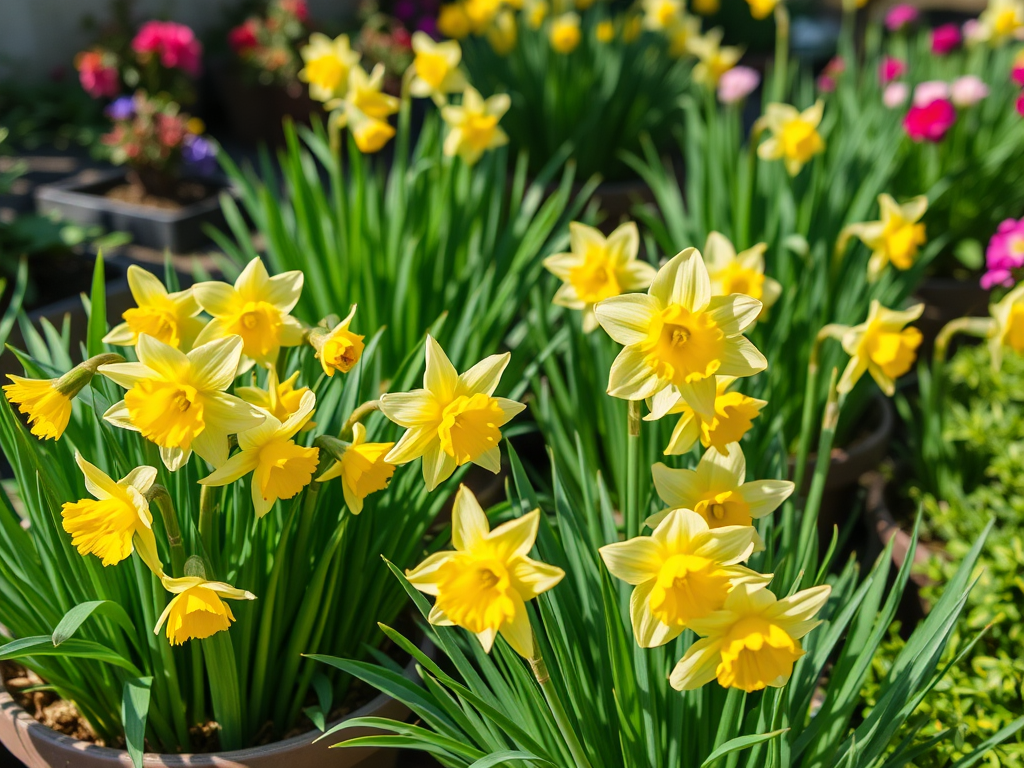
Daffodils are from the Narcissus Genus. The flower gets its name from the Greek story of Narcissus. In Greek Lore Narcissus fell in love with his own reflection and died staring into the reflection, not eating or sleeping. Narcissus refused all advances from women and men and fell in love with his own reflection. Ovid a Roman Poet writes of Narcissus beating his own chest until he died as he could not be united with who he thought was the love of his life which was infact his own reflection. Before 8 AD Ovid wrote of Echo and Narcissus in his epic work Metamorphoses, the story weaves together the idea of longing, vanity, rejection, and transformation into one of the most enduring myths of the ancient world.
In the story, Echo, a mountain nymph, was known for her voice and lively conversation. After distracting Juno so that Jupiter could pursue his affairs, she was punished and cursed to only repeat the words of others. When Echo fell in love with Narcissus, she could not speak her heart, only mirror his language. Rejected by him, she withered away until only her voice remained. In some versions of the myth, it is Nemesis, the goddess of divine retribution, who curses Narcissus in response to the pain he causes others. In later Roman retellings, the moral weight of the story deepens, and the story becomes a reflection of pride, self-absorption, and the consequences of emotional blindness.

Narcissus represents the tension between the ego and the soul. The ego is captivated by image, thoughts of self, validation, and external reflection, constantly seeking affirmation from what it sees mirrored back. It is concerned with appearance, status, and the illusion of separateness. The soul, however, seeks depth, connection, and truth beyond the surface. The Ego is insatiable, when we submit to each demand it’s creates a new one getting more and more outrageous with each demand. In the Narcissus myth, Narcissus mistakes reflection for reality, becoming trapped in the shallow waters of self-absorption. This is the eternal human struggle: do we live from the fragile construct of ego, or from the grounded wisdom of the soul? The story invites us to look beyond the surface of who we think we are and to cultivate a relationship with our deeper essence rather than becoming lost in the glittering image of ourselves.
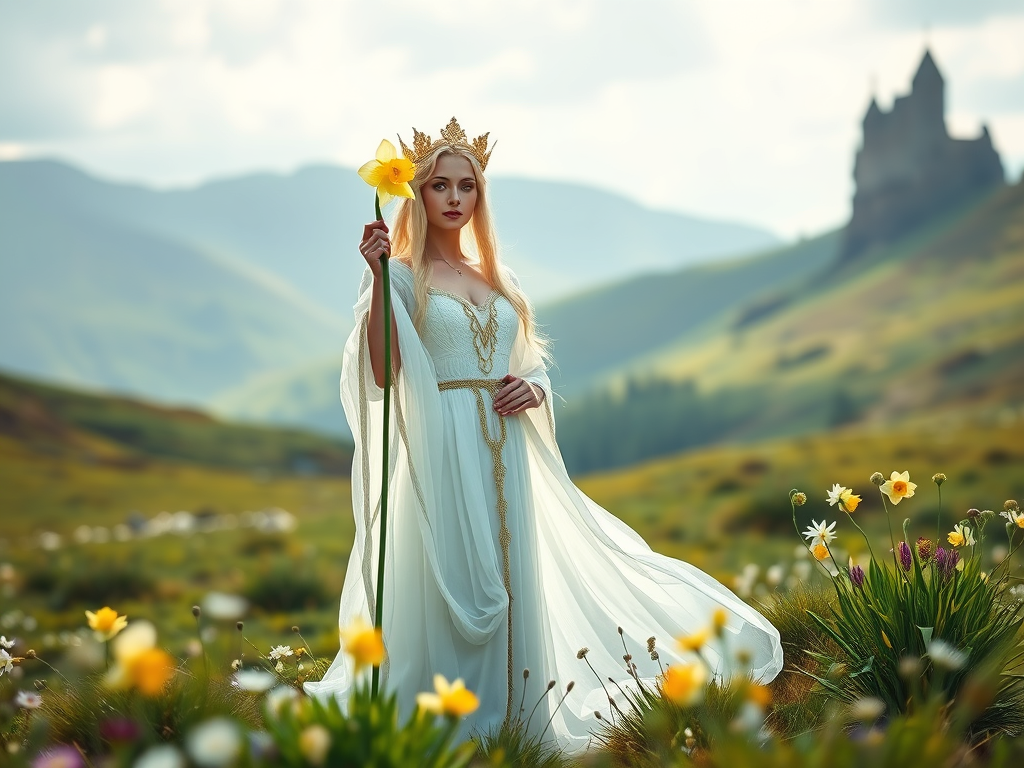
Yet there is still beauty in the story because where Narcissus died a flower bloomed showing the metamorphosis from something ugly to something beautiful. The daffodil emerged as a symbol not only of vanity, but of rebirth and renewal. The Greeks understood metamorphosis as a sacred act of nature. Death was not always an ending but a shift in form. The Romans carried this symbolism forward, associating the flower with spring’s return and the cyclical nature of life. The daffodil’s golden face rising after winter became a reminder that even folly and heartbreak can give way to new growth.
To the ancient Greeks and Romans, these myths were not simply stories of romance gone wrong. They were moral teachings wrapped in poetry. Narcissus embodied the danger of hubris, the excessive pride that the Greeks believed offended the gods and disrupted natural harmony. Echo represented unexpressed longing and the sorrow of not being seen or heard. Together, their story served as a warning about imbalance. To become so enamoured with one’s own image, reputation, or beauty that the world fades away is to step out of alignment with nature and community. The pool that Narcissus gazed into was both literal and symbolic, a mirror that trapped him in illusion.
In folk traditions across Europe, daffodils came to symbolise resilience and happiness. Their bright colour pushes through the cold soil at the end of winter, often when frost still lingers. They are among the first to bloom, announcing that light has returned. In Wales, they are worn as a national emblem of hope and endurance. In other traditions, bringing daffodils into the home was said to attract good fortune, especially if the first bloom of the season was shared rather than kept.The mythology invites us to look deeper than the surface of the flower. Narcissus reminds us that self-love can become self-obsession when it disconnects us from others. Echo teaches us about voice, boundaries, and the cost of silencing ourselves. The daffodil itself teaches resilience. It does not bloom because winter was easy. It blooms because winter happened.
In this day and age we are witnessing in real time what it looks like when individuals inflate themselves to the point that they believe they are god’s. This infatuation with exalting the self and harvesting power from others to use for ones own advances is spiritually immoral and against the laws of balance, cause and effect and inevitably leads to one’s downfall. The Ego in my opinion is like a vampire always thinking about itself yet still operating in child mode and lacking maturity. When we feed the ego monster it needs more and more to satisfy itself and it grows into a humongous giant at a tremendous speed.
Here is what I intuit Daffodil has to say when she appears.
Did you remember that it can be a New Year, a new you? It is February, March, or April now. There is no point clinging to the old stuff. We need to clean out the closet and sweep the dust from under the rug, not only literally but within the mind as well. It is time to revitalise everything. We need space and room now because our seeds are about to grow. But remember, it is not that serious. Shine bright my flower times have been hard but its time to display your glory.
When I unpack that message more deeply, I feel that Daffodil speaks about making room for the new while appreciating the present moment. She invites us to shine and to be who we truly are, rather than pretending to be something or someone else in order to fit in. There is a lightness in her energy. She does not shame. She does not scold. Yet she does not allow us to wallow either. Daffodil arrives with a kind of loving interruption. Attention. I have arrived. Listen. I need to tell you this with love. Then she delivers the truth gently but clearly. Clear out those old straggly leaves. She says. Release the outdated thoughts and behaviours. Let go of the excess that has been weighing you down. Clear out the old soil, the inner narratives and attachments that are no longer serving you at a soul level. It is not dramatic. It is not catastrophic. It is simply time. There is no need to ov think things look at things objectively, make a plan and execute it, no drama, no wailing just optimism and resilience.
Working with the energy of Daffodil is about conscious renewal. It is about recognising what has survived the winter within you and honouring it, while also acknowledging what must be composted to nourish the next cycle. She is the friend who waves brightly from across the field. She is the one who bounces back and returns after tough times with a quiet confidence that says, I am still here.
There is profound resilience in her form. Daffodil bulbs survive freezing temperatures. They lie dormant beneath hard, cold ground, unseen and seemingly lifeless. Yet beneath the surface, life is held in potential. When the season turns, they rise. They do not ask for permission. They simply respond to the light.
In this way, Daffodil teaches us about trust in timing. Dormancy is not death. Stillness is not failure. The unseen inner work of winter prepares the brilliance of spring. When she blooms, it is almost playful. You thought I was gone. You thought I was finished. Guess who is back.
To work with the energy of Daffodil is to embrace gentle courage. It is to clear space without drama. It is to choose authenticity over performance. It is to release ego attachments and return to soul truth. It is to laugh a little at the heaviness we sometimes carry and remember that renewal can be joyful.
The energy of Daffodil is resilience in plant form. It is brightness after bleakness. It is humility after hubris. It is the reminder that we can shed old skins, clear mental clutter, and begin again without making it a punishment. She embodies happiness not as surface glitter, but as the quiet strength of one who has weathered storms and still chooses to bloom.
In her presence we are reminded that renewal is available. That clearing is sacred. That shining is natural. That after every winter within us, there is a season that calls us forward into colour, courage, and light.


Leave a Reply